• Skip to primary navigation
  • Skip to main content
  • Skip to footer
Inter-Narratives Community

Inter-Narratives Community

  • Library
  • Sessions
  • Priorities
  • About
  • Subscribe

Deep narrative

Library

Every two weeks we send out a newsletter full of narrative ideas and resources. We’ve catalogued these ideas by theme and category, which you can search below:


What Does It Mean to Be English?

Theme: Climate & Ecology, Culture change, Economy, Social Justice

Narrative work type: Deep narrative, Narrative Strategy, Tactics

As the rapid rise of Reform prompts urgency and alarm, Taylor feels “something deeper and more uncomfortable is also being asked of us: to invest in the quieter work that surfaces both our nation’s ghosts and our neglected traditions of care, so as to tend to the soil that keeps growing Farages.” Over four articles, she reflects on the fragility of the English identity: “not bedrock but wet clay”, a “quagmire of histories and deep narratives” that is “shaped and reshaped by the stories we allow ourselves to tell.” We are encouraged to imagine and pursue projects, processes, places and practices – an effective “accumulation of small, messy, unglamorous acts” – that face into three paradoxes: “seeding liberatory futures, while refusing to ignore the rot…addressing today’s hardships, while facing modernity’s lies… and tending belonging, while unapologetically naming harm.” She hopes for an Englishness “truer, humbler and more entangled with the land and the people who call this place home.” Also see Parts 2, 3, 4

Author: Ruth Taylor; Culture Soup

How a Green Party Video Went Viral: 4 Narrative Tools For Political Impact

Theme: Climate & Ecology, Culture change

Narrative work type: Deep narrative, Framing, Narrative Strategy, Tactics

The newly elected leader of the UK Greens ran an ad earlier this summer, which racked up 2m views on social media. Here we learn the “nerdy” strategy that went into it, with some lessons for comms elsewhere. ”Some things happen above the line: visible, graspable, immediate.⁠⁠ ⁠⁠Others happen below it: structural, symbolic, emotional – shaping what people feel before they know why.⁠⁠ ⁠⁠This film was built on both… The structure makes the metaphor land. That’s the diamond… It’s not just a call to action. It’s an invitation to ask: what kind of country are we? And what will we refuse to become?… The deeper thread: ecology → psychology → sociology. The crisis isn’t just ecological – it’s structural. And the Greens get that.” In what Clancy calls “the narrative war – over meaning, memory, and who gets to define reality,” this film “wasn’t just a political act – it was a strike in that deeper war.”

Author: Jeremy Clancy; Video Activist

Ripple Effects: How Impact Travels Through Systems

Theme: Climate & Ecology, Economy, Social Justice

Narrative work type: Deep narrative, Narrative Strategy, Tactics

An encouragement to recognise that systems are “dynamic and relational”, and the truth in Donella Meadows’ insistence that “we can’t impose our will on a system”. As such, “impact isn’t always immediate, and meaning often takes time to surface,” because “impact isn’t linear – it radiates, overlaps, collides; feedback matters – as ripples encounter edges, they return, reshape, or amplify; scale doesn’t always equal significance – even small drops can change the pattern if they land in the right place; and context shapes movement – what lies beneath the surface (culture, trauma, history, relationships) can alter how far and fast impact travels.” Which means recognising that “sometimes, our work is not about causing the biggest splash. It’s about creating the conditions for the right kind of ripple – one that is generative, sustaining, and in harmony with the broader system.”

Author: Jen Casorso; Mycelium Notes

Spatial Dramaturgy and the Composition of Desire

Theme: Culture change, Social Justice

Narrative work type: Deep narrative, Narrative Strategy

A reflection on how to “reshape the spaces around us – not only as containers of action, but as co-authors of meaning.” How space “whether physical or social,” becomes “a site to unearth conflict, negotiation and power dynamics;” architecture “a score for living”, and how designing is composing: “to layer time, relation, and desire into form” beginning with longing, and centering the erotic. “To engage in spatial dramaturgy is to ask: What is this space rehearsing? And what other stories and worlds might it be capable of holding? Activating this lens, invites reflection through Black feminist thought, to dream how we might recompose the world otherwise, as led by the curiosities of those who have opted out of the dominant script and developed counter-compositional practices for survival, joy and memory.”

Author: Amahra Spence

Raging Against the Dying Light: A Systems View of Human Futures

Theme: Climate & Ecology, Culture change, Economy, Social Justice

Narrative work type: Deep narrative, Narrative Strategy

A review of the Cascade Institute's Polycrisis Core Model Technical Synopsis prompts an uncomfortable question: “are you preparing for collapse, resisting decline, or building alternatives?” The answer, “we need all three: resilience, resistance, and renewal,” with the insight that across the 10,000 possible ‘Hope attractor’ scenarios (0.25% of all possibilities*) “strong democracy” is a cross-cutting feature. This demands “a critical mass of mature, engaged citizens” equipped with “complexity consciousness” and “long-term, relational, ecological and principled perspectives.” All of which requires a shift in our “how we belong to and are in relationship with the world.” Norris calls this ‘worldview:’ something which “unfolds through the living relationship between the inner and outer arcs of our experience.” As such, shifting worldviews “becomes less reformation and more remembering. Not so much building new mental structures but dissolving back into the aliveness that predates all our stories about it.” *yes, it’s a lot like that scene in Avengers: Endgame

Author: Julian Norris; Wolf Willow Institute

Shifty

Theme: Culture change, Economy, Reactionary, Social Justice

Narrative work type: Deep narrative, Issue narrative

Curtis weaves his trademark tapestry of image, sound and logic to portray a story of power in the UK, proposing a explanation of our recent political history. We explore how an “underlying pessimism about human motives”, along with a mistaken belief in the possibility of control, led Thatcher’s government and its descendants to gradually give away their power. We see this happen through often ludicrous spin and deception, the financialisation of capitalism, and the privatisation of public goods and services (a process we learn was invented, or at least expanded by the Nazis). Major events are set against a backdrop of how the population was feeling, to provide an unsettling, revealing, infuriating and always entertaining perspective on the making of this moment, and a stark observation about the nature of power today. The ending provides an honest reflection on the role of work like this in these times.

Author: Adam Curtis; BBC iPlayer

Organising From Elsewhere

Theme: Climate & Ecology, Economy, Social Justice

Narrative work type: Deep narrative, Narrative Strategy, Tactics

“A radical idea that might just transform the way we organise (or just ‘work together’) to bring about the economic, political and social changes so urgently needed.” Our current ways of organising – hierarchical, democratic, consensus-based – have arisen from and are underpinned by the notion of separation: Organisation is perceived as solving the problem of coordination between individuals that are separated by their goals and preferences… If we continue to use organisational methods shaped by this assumption of separation, we will continue to fail – as seen recently in our failure to prevent the ongoing holocaust in Gaza or the rise of the Far Right.” To do this means committing “to always doing things in a way that increases a felt-sense of interconnectedness,” which means actually understanding “what interconnectedness is and how it feels,” how it is being enabled, and what can practically disable it. Organising From Elsewhere are initiating a learning cycle to explore this.

Author: Gully Davis; Amsterdam Alternative

On Powers, Great and Small

Theme: Climate & Ecology, Culture change, Economy, Social Justice

Narrative work type: Deep narrative, Tactics

It’s tempting to dismiss Josh Schrei’s work as ‘woo-woo’, but doing so would miss the sharp insight and wisdom that his meticulously researched and curated episodes carry – and his own robust aversion to ‘woo-woo’. In a moment where ‘power’ is being sought, deconstructed, and exerted at all levels, this reflection offers a welcome and encouraging pause. “It's vitally important to understand the larger framework of cosmic powers, ecological powers, and the cycles and patterns in which these powers express… This isn't as simple as saying power sucks, or there's no such thing as power, or that power is all human dynamics, so we'll just flatten everything, and that's our way of dealing with Power… we find that the world is shaped and transformed continually by small, invisible, relational powers.” Trusting these small powers may help us resist the fragile “obvious powers” that preoccupy our ruling classes. Features contributions from Nyoongar writer, storyteller and researcher Jack Mitchell, Hawaiian cultural practitioner Kanani Aton, and Living Sanskrit's Shivani Hawkins. A great accompaniment to a walk in the woods.

Author: The Emerald

The Answer to Trump is Revolutionary Love

Theme: Culture change, Social Justice

Narrative work type: Deep narrative, Narrative Strategy

Analysis of what “the shrieking migraine of Trumpism” reveals about our socioeconomic system: capitalism and authoritarianism “gel very well” – not capitalism and democracy; and the loudly-touted opposition between class and identity politics is encouraged, to distract from the reality that people’s needs and freedoms are so often a hindrance to the system’s central goal of making money “for those at the top”. What we need instead is “a lovely new economic system, one that is centred around the things that actually matter: our health, knowing that we are cared for, being close to the ones we love, knowing that we are safe, and that we have the freedom to express ourselves in all our glittering abundance,” which “requires taking love from the realm of the personal into the political.” The first step: “refuse to buy into the politics of hate and fear that the Trumps of the world are selling”, then “open our eyes to the politics of love and care already being practiced all around us, and join in where we can.”

Author: Laura Basu; Grace Blakeley

The Rise Of End Times Fascism

Theme: Climate & Ecology, Culture change, Economy, Social Justice

Narrative work type: Deep narrative, Insight, Narrative Strategy, Tactics

A clear-eyed systemic analysis of "rightwing leaders and their rich allies" who have "bought into various apartheid fantasies of bunkered safety" and are "choosing to let the Earth burn" with a “darkly festive fatalism”. Two recommendations for moving forward: 1. "Understand this simple fact: we are up against an ideology that has given up not only on the premise and promise of liberal democracy but on the liveability of our shared world – on its beauty, on its people, on our children, on other species.” And 2. "Counter their apocalyptic narratives with a far better story about how to survive the hard times ahead without leaving anyone behind. A story capable of draining end times fascism of its gothic power and galvanising a movement ready to put it all on the line for our collective survival. A story not of end times, but of better times; not of separation and supremacy, but of interdependence and belonging; not of escaping, but staying put and staying faithful to the troubled earthly reality in which we are enmeshed and bound."

Author: Naomi Klein, Astra Taylor; The Guardian

We Can’t Manage Decline and Call It Justice

Theme: Climate & Ecology, Economy, Social Justice

Narrative work type: Deep narrative

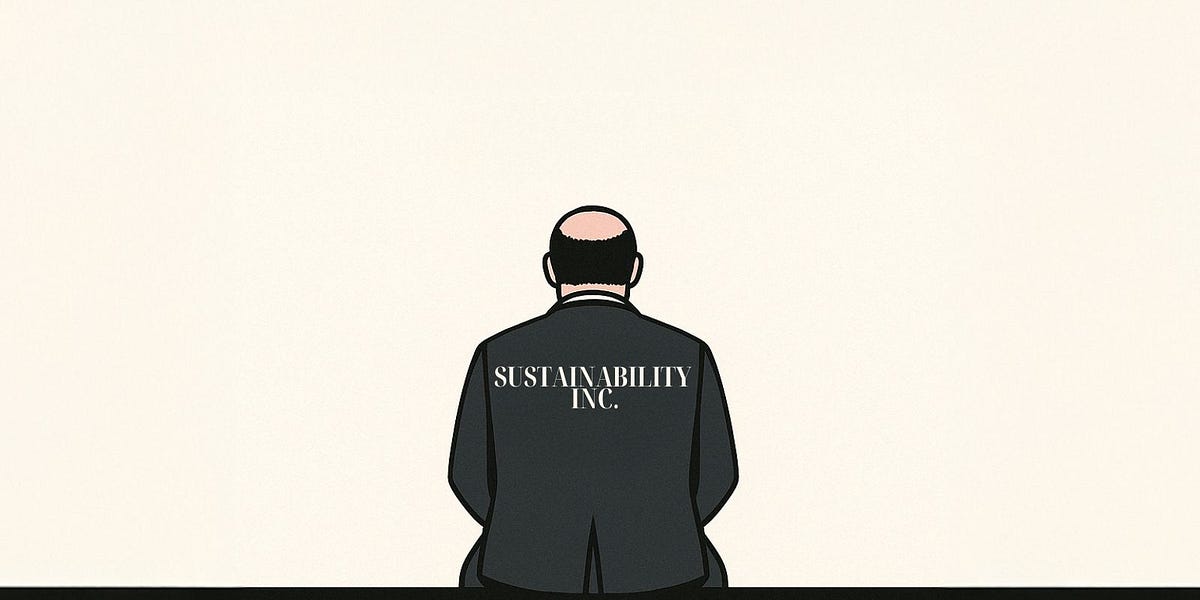
A raw personal reflection from someone confronting their complicity. “We often talk about sustainability as if it’s inherently good. But if we’re not addressing the root causes – the capitalist, extractive systems that birthed the crisis – we’re perpetuating colonialism in greenface. Our strategies become complicit. Our efforts, however well-intentioned, become mechanisms for the system we claim to resist.” For Benjamin, “the idea that we can continue extracting from the Global South under the banner of ‘sustainable development’ is not just misleading. It’s violent… We should be investing in movements, not just in metrics. In coalitions and cooperatives, not only in startups and scorecards. In relationships of care, community-based governance, and decolonial reparations – not just quarterly impact reports.” So he commits to “centering root-cause analysis in my work. To challenging techno-fixes and symbolic impact. To uplifting Indigenous, Black, and land-based justice movements. To practicing solidarity over scalability… because if our work isn’t dismantling the systems killing the planet, it isn’t work worth doing.”

Author: Kasper Benjamin; The Minority Report

Hopium and the Long Defeat

Theme: Climate & Ecology

Narrative work type: Deep narrative

A reflection on how reverence for ecology and biophilia (love of other life) are present in children’s literature, but lost from most modern adult literature and “techno-industrialist” systems that center “human exceptionalism”. Swanigan explores the roots of this; the harm it causes people as they are forced to be violent towards what they were encouraged to love as children whilst being asked to place hope in ‘magical’ technology; and considers how two writers in particular – John Collier and J.R.R. Tolkien – were writing about the possible trajectory that this human exceptionalism puts us on and how we might respond to it. We’re asked to recognise “the extreme and egregious underrepresentation” of the views of those who have been shouting about this in scientific communities and beyond, and to seek to understand the history that supports it. This is a challenging listen, and you may find some of the conclusions to be overly definitive. But the perspective Swanigan shares, drawing from her award-winning essay, demands attention.

Author: Pam Swanigan, Nandita Bajaj; Overshoot

  • Page 1
  • Page 2
  • Page 3
  • Interim pages omitted …
  • Page 19
  • Go to Next Page »

Footer

Get the latest narrative insights, collected and delivered to your inbox, every two weeks

SUBSCRIBE

Questions, comments, or suggestions? Contact us

We are supported by:

The JJ Charitable Trust

Calouste Gulbenkian Foundation

  • Privacy Policy
We use cookies on our website. By clicking “Accept”, you consent to the use of the cookies.
Accept
Read our privacy policy for more details.
Manage consent

Privacy Overview

This website uses cookies to improve your experience while you navigate through the website. Out of these, the cookies that are categorized as necessary are stored on your browser as they are essential for the working of basic functionalities of the website. We also use third-party cookies that help us analyze and understand how you use this website. These cookies will be stored in your browser only with your consent. You also have the option to opt-out of these cookies. But opting out of some of these cookies may affect your browsing experience.
Necessary
Always Enabled
Necessary cookies are absolutely essential for the website to function properly. These cookies ensure basic functionalities and security features of the website, anonymously.
CookieDurationDescription
cookielawinfo-checkbox-analytics11 monthsThis cookie is set by GDPR Cookie Consent plugin. The cookie is used to store the user consent for the cookies in the category "Analytics".
cookielawinfo-checkbox-functional11 monthsThe cookie is set by GDPR cookie consent to record the user consent for the cookies in the category "Functional".
cookielawinfo-checkbox-necessary11 monthsThis cookie is set by GDPR Cookie Consent plugin. The cookies is used to store the user consent for the cookies in the category "Necessary".
cookielawinfo-checkbox-others11 monthsThis cookie is set by GDPR Cookie Consent plugin. The cookie is used to store the user consent for the cookies in the category "Other.
cookielawinfo-checkbox-performance11 monthsThis cookie is set by GDPR Cookie Consent plugin. The cookie is used to store the user consent for the cookies in the category "Performance".
viewed_cookie_policy11 monthsThe cookie is set by the GDPR Cookie Consent plugin and is used to store whether or not user has consented to the use of cookies. It does not store any personal data.
Functional
Functional cookies help to perform certain functionalities like sharing the content of the website on social media platforms, collect feedbacks, and other third-party features.
Performance
Performance cookies are used to understand and analyze the key performance indexes of the website which helps in delivering a better user experience for the visitors.
Analytics
Analytical cookies are used to understand how visitors interact with the website. These cookies help provide information on metrics the number of visitors, bounce rate, traffic source, etc.
Advertisement
Advertisement cookies are used to provide visitors with relevant ads and marketing campaigns. These cookies track visitors across websites and collect information to provide customized ads.
Others
Other uncategorized cookies are those that are being analyzed and have not been classified into a category as yet.
SAVE & ACCEPT