• Skip to primary navigation
  • Skip to main content
  • Skip to footer
Inter-Narratives Community

Inter-Narratives Community

  • Library
  • Sessions
  • Priorities
  • About
  • Subscribe

Deep narrative

Library

Every two weeks we send out a newsletter full of narrative ideas and resources. We’ve catalogued these ideas by theme and category, which you can search below:


Rethinking Success in Regenerative Culture

Theme: Climate & Ecology, Culture change

Narrative work type: Deep narrative, Framing

“Many of us are subtly (or not so subtly) influenced by a heroic, almost narcissistic paradigm that suggests our initiatives should succeed if they are worthy enough, if we work hard enough, or if the conditions are just right. But ecosystems don’t function like that. In a forest, not all acorns sprout. Of those that do, only a fraction survive long enough to become saplings, let alone mature oaks. The rest are broken down, becoming the compost that nourishes the soil, feeds the fungi, and supports the thriving of others… The metaphor of the acorn teaches us that life is cyclical, not linear. An acorn’s purpose is not solely to grow into a tree but to play its role in a complex, interconnected web of life. Sometimes, that role is to grow. Sometimes, it is to nourish. Both are vital… As we step into this new paradigm, we recognise that our true legacy lies not in what we achieve individually but in what we nurture collectively.”

Author: Steffi Bednarek; Centre for Climate Psychology

Are We a Racist Society? The Majority of Us Say No – But Science Begs to Differ

Theme:

Narrative work type: Deep narrative, Insight

The debate around racism is confusing, “it’s hard to know what to believe…it’s hard to know which sources are reporting facts and which are just spouting opinions.” We have “arguments in abundance,” but what the debate ignores is that “there are decades worth of clear, factual, rigorous, quantitative scientific research out there that reveals empirical truths about racism: from its effects on friendships, relationships, healthcare and the criminal justice system to the financial cost of selling items online while Black.” If we are to acknowledge this scientific consensus, we have to drop narratives of ‘unconscious bias’ that merely “protect our own perceptions of innocence, reducing our concerns about the bias we claim to be addressing and ensuring that nobody is ever held accountable for it,” and leave behind “silly” beliefs in the possibility of ‘colour-blindness’, because “a ‘more colour-blind society’ is, scientifically, a more racist one.”

Author: Keon West; The Guardian (extract from The Science of Racism)

Passing in the Dark: Making Visible Philanthropy’s Hidden and Conflicting Mental Models for Systems Change

Theme: Philanthropy

Narrative work type: Deep narrative, Tactics

“The increasing focus on systems change has been a paradigm shift, fundamentally affecting how foundations approach social change, their underlying assumptions, and their ideas about the predictability of change… This perspective has required changes in philanthropic practices and led foundations to see themselves as actors in, and influencers of, systems… But as strategists and evaluators, we see many foundations ignoring some basic truths.” The authors propose that there are two mental models of systems change at play: ‘Systems Dynamics’ (familiar, predictable) and ‘Systems Emergence’ (unfamiliar, experimental), which they explore by outlining examples of strategies that use each one, offering tools for making them practical. They conclude that “neither of the systems-change mental models is inherently better,” but “if we do not make our models visible and align our practices to them, then unintentional disconnects will occur and our work will suffer.”

Author: Jewlya Lynn, Julia Coffman; The Foundation Review, Center for Evaluation Innovation

The 48 Laws Of Power

Theme: Culture change, Reactionary, Social Justice

Narrative work type: Deep narrative, Insight, Tactics

An amusing critique of the infamous ‘autocracy-for-dummies’ manual, reportedly a favourite of Trump, Musk, Bannon, Putin etc., and how it came to be written. The cynicism that produced and pervades it is alarmingly cold-hearted, and includes advice like: “You must first attract attention. This you should do not through actions which are too clear and readable but through words which are hazy and deceptive. You must include two elements: on the one hand the promise of something great and transformative and on the other a total vagueness.” It is underpinned by ‘zero-sum ideology’ – the mistaken view that humans and the rest of nature evolve through conflict rather than mutual aid. This, the hosts argue, reflects and encourages the “uniquely American phenomenon that a lot of people view the world so adversarially that they are willing to forego helping people as long as that ensures that they can't be taken advantage of in some way.” An amusing critique of the infamous ‘autocracy-for-dummies’ manual, reportedly a favourite of Trump, Musk, Bannon, Putin etc., and how it came to be written. The cynicism that produced and pervades it is alarmingly cold-hearted, and includes advice like: “You must first attract attention. This you should do not through actions which are too clear and readable but through words which are hazy and deceptive. You must include two elements: on the one hand the promise of something great and transformative and on the other a total vagueness.” It is underpinned by ‘zero-sum ideology’ – the mistaken view that humans and the rest of nature evolve through conflict rather than mutual aid. This, the hosts argue, reflects and encourages the “uniquely American phenomenon that a lot of people view the world so adversarially that they are willing to forego helping people as long as that ensures that they can't be taken advantage of in some way.”

Author: If Books Could Kill

‘Capitalism’ Bonus: Live at Motorco

Theme: Economy, Social Justice

Narrative work type: Deep narrative, Tactics

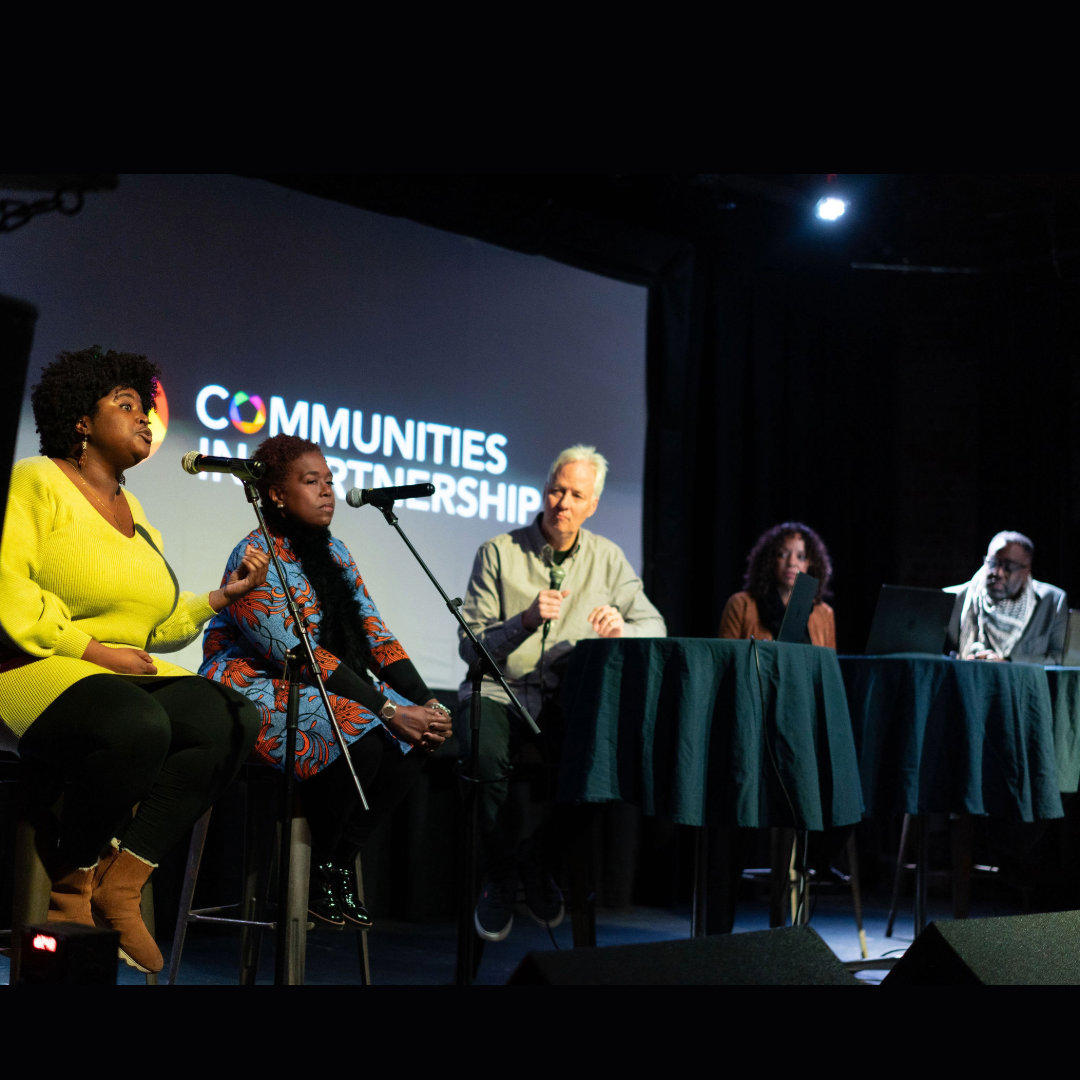
“Now what? Can we find hope and a way forward? In a live show taped December 5, 2024, at Motorco Music Hall in Durham, North Carolina, Season 7 co-hosts John Biewen and Ellen McGirt are joined by journalism professor, podcaster, and two-time Scene on Radio co-host Chenjerai Kumanyika. They discuss how to move toward a more democratic economy and society – with the live audience, and with Camryn Smith and Courtney Smith of Durham’s Communities in Partnership.” We hear about what it takes for ‘community-rooted’ action to be properly resourced, and are called to put trust and energy in the people on the front lines. “Literally, trust black women. Trust indigenous women. Trust women of color who are hard on the ground doing the work. Because we do 98% of the lion's share of the on the ground work, but we receive less than 3% of all philanthropic funding. Could you imagine what this nation would look like with us, properly supported, doing what we're doing now?”

Author: Scene On Radio

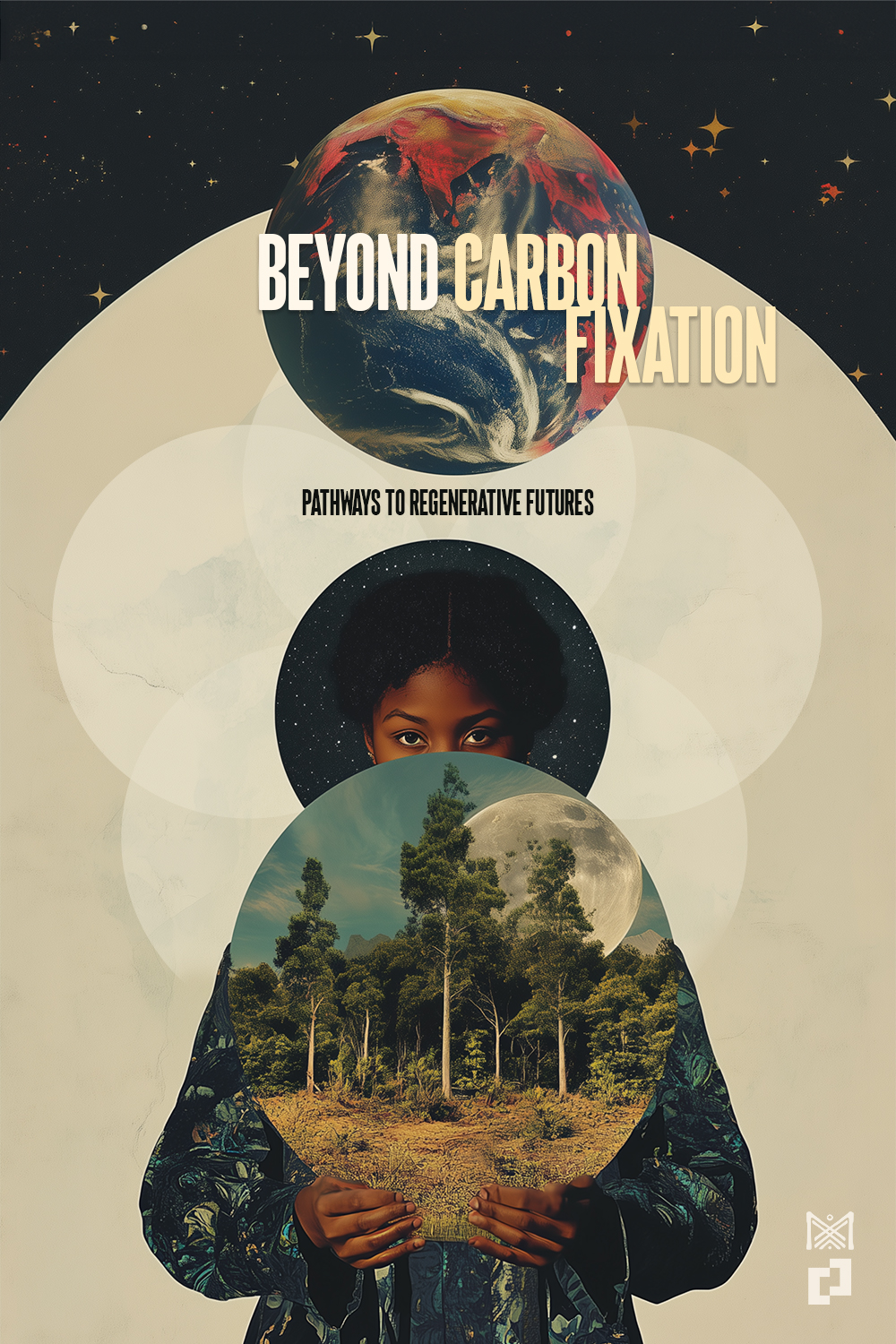
Beyond the Carbon Fixation: Pathways to Regenerative Futures

Theme: Climate & Ecology, Culture change, Economy, Social Justice

Narrative work type: Deep narrative, Insight, Narrative Strategy

A new compilation of research, delivered in four parts with nine complementary articles, which serves as a “navigational tool” to show how “systems change emerges through practice, not just theory.” The authors work from the deep “roots of the metacrisis”, to look beyond “carbon-centered approaches to the climate crisis limited by reductionist metrics and market-driven solutions” and find different possibilities in already-existing pathways “embodied by living examples.” These pathways are intending to “liberate land, waters, ecosystems, and communities from the enclosures of capitalism and colonialism…rooted in justice, solidarity, community stewardship, regenerative economies, and shifts towards more ecological consciousness.” In particular, see their Narrative Analysis Summary.

Author: Culture Hack Labs

Language and Violence

Theme: Climate & Ecology, Culture change, Economy, Social Justice

Narrative work type: Deep narrative, Framing

An exploration “from first principles” of the systemic nature of violence, “how it permeates the human project at every level, and how language is deployed to obfuscate, distract and even deny that which we bear witness to.” Covering different points in history, beginning with the Iberian conquest of the Americas, Amrith, author of The Burning Earth, and Donald reveal “the incontrovertible relationship between violence against the earth and violence against people”, and how “the justification to extract life from the non-human world inevitably justifies the hierarchies which then see the world’s most vulnerable human beings exploited and even killed.” We learn of the injustice with which not just modern capitalism, but “the human project” overall was built, and about the ideologies that have “justified rampant destruction and extraction”, considering how to imagine “a better world tomorrow with the political language the past has to offer.”

Author: Sunil Amrith, Rachel Donald; Planet: Critical

Post-election ’24 All-Star Special

Theme: Climate & Ecology, Culture change, Economy, Election24, Social Justice

Narrative work type: Deep narrative, Tactics

Host John Biewen gathers his co-pilots from recent seasons of Scene On Radio, which have covered capitalism, racism, sexism, and climate, to discuss the US election result. They share their analyses, worries and advice for how to respond, offering reassurance that we’re not starting from scratch. They encourage us to “turn to people in movements who are already working…find those people, amplify their stories, and make sure they continue to do the work.” They warn that “we can get into messaging and all these other tweaks, but at some point we're going to have to tackle the dominant understandings of how we understand the world…and if we don't get to that, you can do all the tweaking you want...but you're going to see the same cycle continue to play out.” One way to do this is to accept that ultimately, “we can only talk our way out of this…forming an empathic bond between two humans is the only way we have ever found to eventually change someone's mind.”

Author: Ellen McGirt, Chenjerai Kumanyika, Celeste Headlee, Amy Westervelt; Scene On Radio

Decoupling The Good Life From Capitalism

Theme: Economy, Social Justice

Narrative work type: Deep narrative, Stories

Soon explores their experience of China, where unlike what we are told, “beneath the veneer of the new modernism and policy intervention, capitalism’s familiar cracks have emerged.” They see that “‘The Good Life’ created under the conditions of capitalism today, imposes, for many around the world, a fallacy of being able to truly meet our needs. Even if it does, it ends up being at the expense of others.” With a warning that unless we can address those being left behind by this fallacy, they will be “scooped up by harmful extremism — all under the illusion of care”, and that to offer “a meaningful alternative economic system, it is essential that we engage with what we dream of as ‘good lives‘ – the diverging stories, in their own framing and in their own language, of what this looks like to different people all around the world.”

Author: Miho Soon; Post Growth Institute

The Charity Sector Has an Anti-Palestinian Racism Problem

Theme: Social Justice

Narrative work type: Deep narrative, Insight, Issue narrative

“As we continue to see heartbreaking and harrowing images of death and destruction coming out of Gaza, so called ‘neutrality’ is no longer a credible option for charity leaders. Staying quiet in the face of genocide means normalising it, and charities are failing their charitable missions by not standing with the people of Palestine… 81% of staff reported that they are dissatisfied with their organisation’s response (or lack thereof) to Gaza. With a staggering 50% of staff saying they are “extremely disappointed” with their organisation’s handling of the situation in Gaza… The charity sector must ask itself honestly - does it see Palestinians as human beings and is it concerned about their suffering? The people who responded to our survey are the future of the sector, and it is time for the leaders of our charities to stand alongside them and with the people of Palestine.”

Author: Charity So White

COP29 Wasn’t About Climate

Theme: Climate & Ecology, Economy, Social Justice

Narrative work type: Deep narrative, Insight, Issue narrative

“It was about an economic and geopolitical hierarchy that is not supposed to be disturbed… The Global North knows very well that real transformative climate finance will actually unleash a tremendous development potential in the Global South, and that will disrupt the global economic and geopolitical hierarchy, which is unacceptable for the Global North. That is the bottom line. It's a colonial mentality dressed up in greenwashed diplomatic violence… The Global South recognises that we need to create a geopolitical leverage to pressure the historic polluters to act differently…(it) is not asking for charity and is not playing the victim. We are demanding payments for a legitimate climate debt… We are the global majority. We can leverage the complementarity of our resources and capabilities to impose a new international economic order of justice, peace, and prosperity.” A strategy will follow; see a quick video explanation of the ‘Bargain of the Century’ at the end in the meantime. Also see.

Author: Fadhel Kaboub; Global South Perspectives

The Starkest Collapse Prognosis I’ve Heard

Theme: Climate & Ecology, Culture change, Economy, Social Justice

Narrative work type: Deep narrative, Tactics

An exploration of how the untreated root cause of our predicament – “the nature of how we relate to the planet and theorise value” – is presenting a “fork in the road.” Johar warns that it now our ‘duty‘ to avoid self-terminating runaway collapse, in favour of difficult-but-viable ‘slingshot economics’ pathways. Johar proposes the need for a profound transformation in perspective, from ‘bio-degradable to ‘bio-nutritious’; ‘power over’ to ‘care with’; towards ‘poly-infrastructure’ with ‘self sovereignty’; recognising that there is no ‘other’: “we're all implicated, and in that the only obligation is to move together.” For Johar, ‘re-animification’ or ‘re-agentification’ – recognising the vital agency of the rest of nature – is how we can handle otherwise-overwhelming complexity, an evolutionary hack we have lost but must retrieve now. He calls all of us now, in whatever work we do, to be paying close attention to the ‘dark matter’ that underpins our societies, and “expanding what it means to be human” to resist the terminal devaluing of the human by modern economics.

Author: Indy Johar, Sarah Wilson; Wild

  • « Go to Previous Page
  • Page 1
  • Page 2
  • Page 3
  • Page 4
  • Page 5
  • Interim pages omitted …
  • Page 19
  • Go to Next Page »

Footer

Get the latest narrative insights, collected and delivered to your inbox, every two weeks

SUBSCRIBE

Questions, comments, or suggestions? Contact us

We are supported by:

The JJ Charitable Trust

Calouste Gulbenkian Foundation

  • Privacy Policy
We use cookies on our website. By clicking “Accept”, you consent to the use of the cookies.
Accept
Read our privacy policy for more details.
Manage consent

Privacy Overview

This website uses cookies to improve your experience while you navigate through the website. Out of these, the cookies that are categorized as necessary are stored on your browser as they are essential for the working of basic functionalities of the website. We also use third-party cookies that help us analyze and understand how you use this website. These cookies will be stored in your browser only with your consent. You also have the option to opt-out of these cookies. But opting out of some of these cookies may affect your browsing experience.
Necessary
Always Enabled
Necessary cookies are absolutely essential for the website to function properly. These cookies ensure basic functionalities and security features of the website, anonymously.
CookieDurationDescription
cookielawinfo-checkbox-analytics11 monthsThis cookie is set by GDPR Cookie Consent plugin. The cookie is used to store the user consent for the cookies in the category "Analytics".
cookielawinfo-checkbox-functional11 monthsThe cookie is set by GDPR cookie consent to record the user consent for the cookies in the category "Functional".
cookielawinfo-checkbox-necessary11 monthsThis cookie is set by GDPR Cookie Consent plugin. The cookies is used to store the user consent for the cookies in the category "Necessary".
cookielawinfo-checkbox-others11 monthsThis cookie is set by GDPR Cookie Consent plugin. The cookie is used to store the user consent for the cookies in the category "Other.
cookielawinfo-checkbox-performance11 monthsThis cookie is set by GDPR Cookie Consent plugin. The cookie is used to store the user consent for the cookies in the category "Performance".
viewed_cookie_policy11 monthsThe cookie is set by the GDPR Cookie Consent plugin and is used to store whether or not user has consented to the use of cookies. It does not store any personal data.
Functional
Functional cookies help to perform certain functionalities like sharing the content of the website on social media platforms, collect feedbacks, and other third-party features.
Performance
Performance cookies are used to understand and analyze the key performance indexes of the website which helps in delivering a better user experience for the visitors.
Analytics
Analytical cookies are used to understand how visitors interact with the website. These cookies help provide information on metrics the number of visitors, bounce rate, traffic source, etc.
Advertisement
Advertisement cookies are used to provide visitors with relevant ads and marketing campaigns. These cookies track visitors across websites and collect information to provide customized ads.
Others
Other uncategorized cookies are those that are being analyzed and have not been classified into a category as yet.
SAVE & ACCEPT