• Skip to primary navigation
  • Skip to main content
  • Skip to footer
Inter-Narratives Community

Inter-Narratives Community

  • Library
  • Sessions
  • Priorities
  • About
  • Subscribe

Economy

Library

Every two weeks we send out a newsletter full of narrative ideas and resources. We’ve catalogued these ideas by theme and category, which you can search below:


From Interconnection to a “Larger Us”: Expanding Circles of Identity, Care, and Solidarity (Part 1)

Theme: Care, Culture change, Economy, Philanthropy, Social Justice

Narrative work type: Narrative Strategy

“Interconnection is a narrative antidote to authoritarianism,” but we must “embody interconnection in how we see ourselves and organise.” Because “narrative work isn’t just about crafting stories to make sense of reality; it’s also about shaping the lived experiences and the sense of possibility we collectively nurture.” So we must “expand the boundaries of our identity beyond organisational logos, single-issue campaigns, and geographical silos that have long structured our social change efforts.” Roa also guards against the trap of ‘us and them’ framing: “every time we frame those who sow fear as a distinct ‘them,’ we inadvertently reproduce the same logic we’re trying to dismantle.” Instead, ‘change the game’ by “inviting people on a collective journey where the goal isn’t to defeat ‘the other,’ but to build a shared future rooted in dignity, interconnectedness, and the common good.”

Author: Mónica Roa; Puentes, Horizons Project

It All Starts With a Cup of Tea

Theme: Climate & Ecology, Culture change, Economy, Social Justice

Narrative work type: Narrative Strategy, Tactics

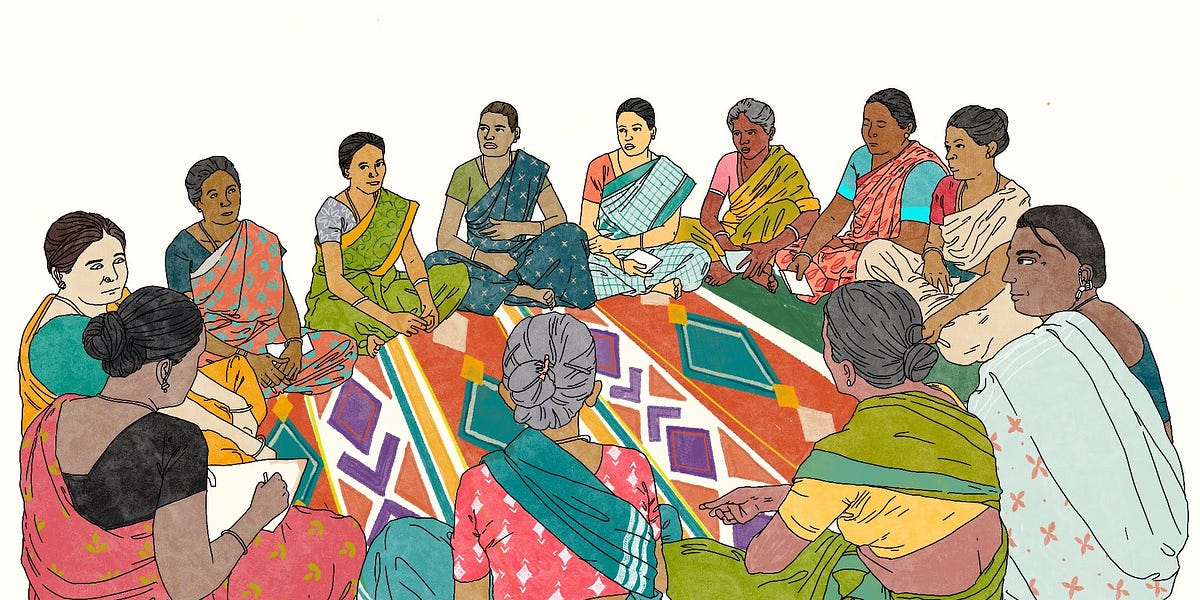
Getting together to build alternatives is quite overwhelming. “If it feels impossible – on top of paying the bills / feeding the kids / surviving – to build a wind turbine like the folks in Lawrence Weston, or buy your own farm like the community in Fordhall, can you really join in?” Golding offers a way through with three simple, accessible ingredients: “1. A handful of people; 2. A shared frustration; 3. A cup of tea / a pint of beer / some food.” He reminds us that “change inevitably starts small, and personal,” and that “caring beats control: when people come together to take on an issue they care about, they’re more likely to commit with creativity, determination and irrepressible energy than they are when change is forced on them from outside… If energy can be unlocked, and skills pooled, the resulting change can be huge – as the projects we’re sharing show.”

Author: Matt Golding; Antidote

Subaltern Storytelling

Theme: Climate & Ecology, Culture change, Economy, Social Justice

Narrative work type: Framing, Narrative Strategy

Reflections on “a field of post-colonial theory that looks at how the most marginalised people are silenced,” noticing that “we in social change also tend to speak for the subaltern: the ‘suffering subject’ of our stories, victim of injustice but lacking agency to confront it without our intervention.” We’re encouraged to “recognise the agency that exists in communities, which states cannot control” and work with “narrative as something we do together, not something we broadcast.” To do this, ask if you’re “open to being changed by the people you speak with? Or are you just looking to ‘get the message out’?” and notice that “narrative is not something we fixed that emerges from one round of research, but a fluid mosaic of conversations and stories that is constantly evolving.” To truly effect decolonisation, “articulate some sense how we will all live in the future we want to see happen,” but remember that “we cannot rely on ‘magic words’ to change the narratives. Instead, we have to be the narrative.”

Author: Thomas Coombes; Hope-Based Communication

Carbon Is Not Our Enemy

Theme: Climate & Ecology, Culture change, Economy

Narrative work type: Framing, Narrative Strategy

“Carbon – the fourth most abundant element in the universe, and a fundamental building block of life – is being maligned in a way that distracts from the root causes of ecological destruction in favour of technological solutions that are not viable at scale, or international agreements that prioritise carbon accounting.” So says Paul Hawken in his new book. He also says that “community is the source of change, and what we have are obviously systems that are destroying community everywhere,” so “we have to be able to develop language about where we are, what’s happening, and where we wish to go… commensurate with that innate desire for us to connect, be families, love our children, be in wonder and awe, and be secure.” This means “we have to create a climate movement that is actually the human movement. And the human movement is humans that are not separate and distinct from nature… can we enter a different narrative for us, all of us, that actually allows us to listen, to connect, as opposed to know?”

Author: Paul Hawken, Rachel Donald, Mike Digirolamo; Planet: Critical, Mongabay

We Can’t Manage Decline and Call It Justice

Theme: Climate & Ecology, Economy, Social Justice

Narrative work type: Deep narrative

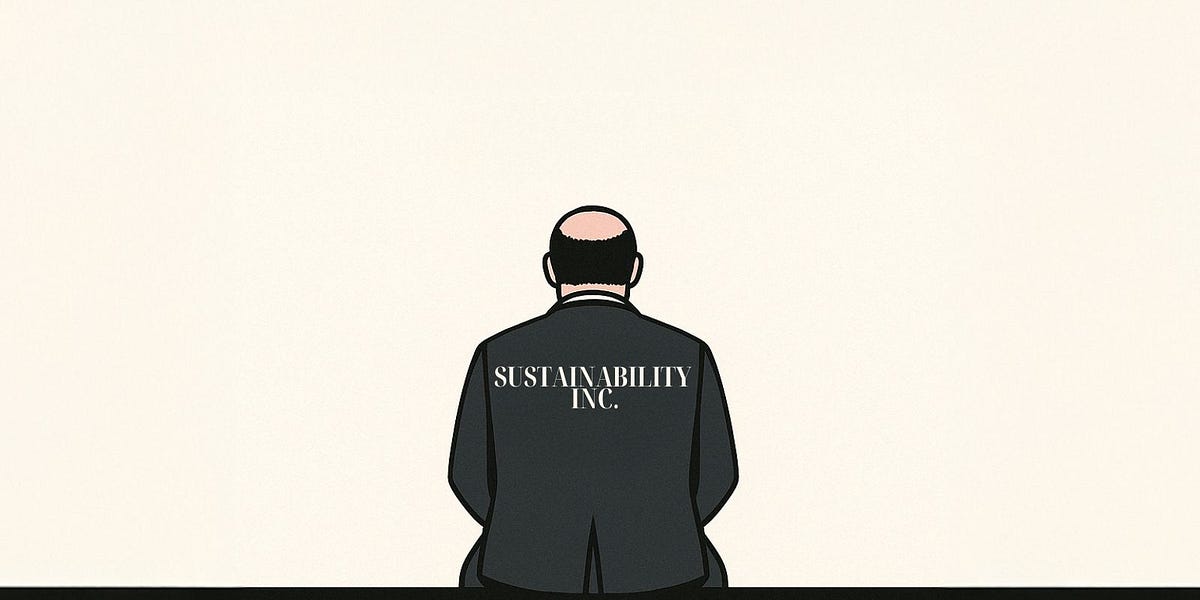
A raw personal reflection from someone confronting their complicity. “We often talk about sustainability as if it’s inherently good. But if we’re not addressing the root causes – the capitalist, extractive systems that birthed the crisis – we’re perpetuating colonialism in greenface. Our strategies become complicit. Our efforts, however well-intentioned, become mechanisms for the system we claim to resist.” For Benjamin, “the idea that we can continue extracting from the Global South under the banner of ‘sustainable development’ is not just misleading. It’s violent… We should be investing in movements, not just in metrics. In coalitions and cooperatives, not only in startups and scorecards. In relationships of care, community-based governance, and decolonial reparations – not just quarterly impact reports.” So he commits to “centering root-cause analysis in my work. To challenging techno-fixes and symbolic impact. To uplifting Indigenous, Black, and land-based justice movements. To practicing solidarity over scalability… because if our work isn’t dismantling the systems killing the planet, it isn’t work worth doing.”

Author: Kasper Benjamin; The Minority Report

The Squeeze Out: Why Labour Is Crushing Your Living Standards

Theme: Economy, Social Justice

Narrative work type: Framing, Messaging

Through a simple and accessible explanation of the history behind why “Labour are being forced to do Austerity 2.0,” Stevenson offers a suggestion for how best to talk about wealth inequality with ordinary British people: “The Squeeze Out of the working class, The Squeeze Out of the middle class, The Squeeze Out of the government by rich people.” ‘The Squeeze Out’, Stevenson suggests, “is a really powerful way to explain to ordinary people what’s happening and how it affects them.” Our typical language: ‘wealth inequality’, “can sound academic, idealistic, egalitarian, politics of envy” whereas ‘The Squeeze Out’ focuses on “the most damaging and dangerous effect for ordinary people:” as the rich outcompete other groups in society for assets, over time, everyone else has fewer assets and more debt. There are five stages to this process, and we’re not far off the fifth now: “the rich own everything, and the only way they can grow their wealth is by sending you to fight in their wars against each other.” To stop this ‘squeeze out’: “tax wealth, not work”.

Author: Gary Stevenson; Garys Economics

How to Build ‘Hard Hope’

Theme: Climate & Ecology, Culture change, Economy, Social Justice

Narrative work type: Narrative Strategy, Tactics

“Soft hope is passive – the belief that things will improve on their own. Hard hope is different. It acknowledges struggle, faces complexity head-on, and chooses to act anyway.” We’ve heard something like this before, but what’s interesting here is the science-backed suggestion to center curiosity, which “rewires the brain to handle uncertainty better. It triggers dopamine, making problem-solving more engaging, and quiets the amygdala, reducing fear-based reactions. It also strengthens the prefrontal cortex, enhancing critical thinking, emotional regulation, and long-term planning. Curiosity-driven exploration activates (brain) regions like the striatum and precuneus, improving attention and memory formation.” Along with kindness, “curiosity beats anxiety because it feels better, but also because it moves us in the opposite direction, from closed to open.” So, how might our storytelling “start strategically generating more curiosity in the world?”

Author: Lisa Witter; Hope-Based Communication

The US is Collapsing Like The USSR. So What Comes Next?

Theme: Climate & Ecology, Culture change, Economy, Social Justice

Narrative work type: Deep narrative, Insight, Tactics

A clarifying suggestion of how we can locate the Trump regime’s actions within the ‘adaptive cycle model’, which seeks to understand the trajectory of living systems. “Trumpocracy 2.0” can be seen as “the fulcrum of the movement of industrial civilisation through the “release” stage – a period of breakdown in which entrenched structures and institutions unravel under their own rigidity and contradictions”. This is the third of four system stages – 1. Growth and accumulation, 2. Conservation/stability, 3. Release, 4. Reorganisation – and “manifests as a collapse dynamic: old paradigms and power structures begin to break apart, opening up a new, if turbulent, possibility space for transformation.” Though identifying “seven sources of rot”, including how “in a failing system, ruling powers double down on military expansion and authoritarian control to stave off crises,” we can plan to navigate this ‘Release’ stage by making critical shifts, including developing ‘energy commons’, ‘decentralised and participatory organisational structures’ and a ‘cultural shift towards regenerative values’.

Author: Nafeez M Ahmed; Age of Transformation

China: A Socialist Introduction

Theme: Climate & Ecology, Culture change, Economy, Social Justice

Narrative work type: Insight, Issue narrative

A challenge to prevailing Western narratives about China, offering a different perspective on the recent history of their civilisation and the West’s relationship to it. In particular we are asked to consider how China have developed so successfully, despite the West’s concerted attempts to suppress them, and reconsider events accordingly. For example we typically assume that the Tiananmen Square protest and massacre was a suppression of anti-Communist dissidence, when actually “exactly the opposite is true. They were protesting against the US-backed capitalist reforms”. Hickel provides various data and insights to challenge typical assumptions, including the role of markets in the clean energy transition, and what led to China’s success in reducing poverty and inequality (e.g. they put limits on billionaires). We’re asked to rethink suggestions that China is Imperialist, and consider whether it might even be more democratic than the US.

Author: Jason Hickel; Upstream

We Have Been Subverted

Theme: Climate & Ecology, Culture change, Economy, Reactionary, Social Justice

Narrative work type: Deep narrative, Insight

If you’ve been paying attention to reactionary discourse and propaganda (e.g. from ARC forum), the perspective shared here will be familiar, but it’s useful to see it so clearly laid out – and to see how the same collapse signals are leading to very different conclusions for people. Ali introduces us to the tactics of subversion, courtesy of a former KGB agent, and how they have been employed in a “systematic and totalising way” to undermine and erode Western values. She asks “who is doing the subverting, who is trying to unravel America and the West?” In her view: “American Marxists… Radical Islamists… and The Chinese Communist Party,” with Vladimir Putin “waging his own subversion campaign by supporting and advancing the three other forces.” We are warned they are “promoting ideas that weaken the bonds between members of the family, promoting narcissistic individualism over family unity, creating financial stressors that discourage family formation (and) acrimony between the sexes”, and told that “a closed society is immune to subversion because it simply tells potential subverters to leave. Free and open societies cannot rely on this defence.” Whoever it is that is actually using the tactic, ‘divide and conquer’ seems to be working.

Author: Ayaan Hirsi Ali; The Free Press

Decolonial Work

Theme: Climate & Ecology, Culture change, Economy, Social Justice

Narrative work type: Deep narrative, Tactics

An exploration of moving beyond efforts to perfect the “visible structures of knowledge, power, and legitimacy“, through for example “institutional reforms, language policing, and compliance-driven inclusion efforts”, which focus on “moral purification” and “performative correction”. Instead we are encouraged to delve deeper, getting underneath with a “meta-critical, metabolic approach” focused on “tending to the soil, the fungi, and the unseen networks of relationality that sustain life,” which requires us to engage with decay and decomposition “as necessary elements of change, rather than failures to be avoided”. We are offered a table that compares a control-based ‘pruning the bonsai’ approach with a meta-critical ‘metabolising decay’ approach. Doing this deepest work “is not about perfecting what exists – it is about clearing space for what is yet to come.”

Author: Gesturing Towards Decolonial Futures

The Work of Hospicing

Theme: Climate & Ecology, Culture change, Economy, Social Justice

Narrative work type: Deep narrative, Tactics

In this time of endings, we are encouraged to “move beyond fear and embrace the deep transitions ahead with wisdom.” As stewards, we will “develop the practices and capacities to tend to these endings, not with urgency or control, but with a kind of stillness that invites the birth of new ways of being,” and “reimagine how we relate to endings, not as catastrophic failures or moments to be avoided, but as natural processes that hold within them the seeds of renewal.” The pose this requires may feel unusual to us, certainly those in corporate roles, because “what we need is more like disinvestment than disruption”. We need to disinvest from these certainties and invest in our capacities for complexity,” and to be wise takes a “commitment to the viability of the matter while retaining a sense of the mystery and movement of the whole existing beyond us.”

Author: SSRI; Vanessa Andreotti, Habiba Nabatu

  • « Go to Previous Page
  • Page 1
  • Page 2
  • Page 3
  • Page 4
  • Page 5
  • Interim pages omitted …
  • Page 36
  • Go to Next Page »

Footer

Get the latest narrative insights, collected and delivered to your inbox, every two weeks

SUBSCRIBE

Questions, comments, or suggestions? Contact us

We are supported by:

The JJ Charitable Trust

Calouste Gulbenkian Foundation

  • Privacy Policy
We use cookies on our website. By clicking “Accept”, you consent to the use of the cookies.
Accept
Read our privacy policy for more details.
Manage consent

Privacy Overview

This website uses cookies to improve your experience while you navigate through the website. Out of these, the cookies that are categorized as necessary are stored on your browser as they are essential for the working of basic functionalities of the website. We also use third-party cookies that help us analyze and understand how you use this website. These cookies will be stored in your browser only with your consent. You also have the option to opt-out of these cookies. But opting out of some of these cookies may affect your browsing experience.
Necessary
Always Enabled
Necessary cookies are absolutely essential for the website to function properly. These cookies ensure basic functionalities and security features of the website, anonymously.
CookieDurationDescription
cookielawinfo-checkbox-analytics11 monthsThis cookie is set by GDPR Cookie Consent plugin. The cookie is used to store the user consent for the cookies in the category "Analytics".
cookielawinfo-checkbox-functional11 monthsThe cookie is set by GDPR cookie consent to record the user consent for the cookies in the category "Functional".
cookielawinfo-checkbox-necessary11 monthsThis cookie is set by GDPR Cookie Consent plugin. The cookies is used to store the user consent for the cookies in the category "Necessary".
cookielawinfo-checkbox-others11 monthsThis cookie is set by GDPR Cookie Consent plugin. The cookie is used to store the user consent for the cookies in the category "Other.
cookielawinfo-checkbox-performance11 monthsThis cookie is set by GDPR Cookie Consent plugin. The cookie is used to store the user consent for the cookies in the category "Performance".
viewed_cookie_policy11 monthsThe cookie is set by the GDPR Cookie Consent plugin and is used to store whether or not user has consented to the use of cookies. It does not store any personal data.
Functional
Functional cookies help to perform certain functionalities like sharing the content of the website on social media platforms, collect feedbacks, and other third-party features.
Performance
Performance cookies are used to understand and analyze the key performance indexes of the website which helps in delivering a better user experience for the visitors.
Analytics
Analytical cookies are used to understand how visitors interact with the website. These cookies help provide information on metrics the number of visitors, bounce rate, traffic source, etc.
Advertisement
Advertisement cookies are used to provide visitors with relevant ads and marketing campaigns. These cookies track visitors across websites and collect information to provide customized ads.
Others
Other uncategorized cookies are those that are being analyzed and have not been classified into a category as yet.
SAVE & ACCEPT