• Skip to primary navigation
  • Skip to main content
  • Skip to footer
Inter-Narratives Community

Inter-Narratives Community

  • Library
  • Sessions
  • Priorities
  • About
  • Subscribe

Philanthropy

Library

Every two weeks we send out a newsletter full of narrative ideas and resources. We’ve catalogued these ideas by theme and category, which you can search below:


Solidarity Infrastructures – What Do We Leave Behind When the Grant Ends?

Theme: Philanthropy, Social Justice

Narrative work type: Framing, Infrastructure, Tactics

Following a retreat held last year on Digital Liberation, co-hosted by Weaving Liberation, Dalan Fund, Whose Knowledge? and Numun Fund, the authors reflect on what is required for resilient justice work, and outline the priorities of a new Solidarity Infrastructure Collective. The Collective imagines “a collectively owned and governed movement space – physical solidarity infrastructure – that transcends one-off grants” aiming to “mobilise our different resources to challenge the dependency cycles we all, at different levels, find ourselves in” with a key objective of working towards “the collective ownership of land in Europe and West Africa governed by local groups.” Accompanied by concrete examples, they suggest that sustainable long-term resourcing requires: “Enabling peer solidarity; Enabling income generation; and Supporting land justice,” recognising a shared “urgency in radically reimagining the role of philanthropy.”

Author: Laurence Meyer, Nino Ugrekhelidze, Salmana Ahmed, élysse marcellin and Cassie Denbow; Alliance Magazine

The Fightback Against Reform

Theme: Culture change, Election29, Philanthropy

Narrative work type: Insight, Narrative Strategy

A “deliberately provocative” assessment of the “much deeper malaise” beneath Reform’s rise: “a loss of faith in the future”, enabled by civil society’s failure to respond with a suitably uplifting vision. Evans lists four reasons for this failure: the “professionalisation of so much of civil society”; the Charity Commission’s insistence on funders being ‘apolitical’; funders themselves being risk-averse and short-term; and those civil society professionals’ disconnection from the majority. “We so often end up deepening divisions in a way that helps the populist right, instead of bridging divides and building the broader coalitions that we so urgently need.” This piece tees up a second part that will explore the “incredible points of light out there that we can learn from and build from,” which can help us all see “a positive, people-powered insurgency: one that brings us together instead of dividing us, that fires us up with a sense of possibility and purpose, and that enables us to build a brighter future together.”

Author: Alex Evans; The Good Apocalypse Guide

Systems Thinking Will Not Save Us

Theme: Climate & Ecology, Culture change, Economy, Philanthropy, Social Justice

Narrative work type: Tactics

An argument that “while understanding complexity is important, the uncritical centring of systems thinking risks becoming a dangerous distraction.” Kabba outlines five conditions of the way systems work – e.g. "Systems are not neutral,” “Complexity masks power,” “Knowledge without action is paralysis” – and how they reveal deficiencies in current leadership, before proposing five principles for a new mode of leadership that “goes further”. They suggest this leadership will be an “every-day practice – rooted in ethics, reflexivity, responsibility, and the courage to lead when the system maps are incomplete and the stakes are high.” The ask, which might feel galling for those of us who still find comfort in retreating into theory, abstraction and the padded embrace of a desk chair, is to recognise the risk of “circling conversations that feel comforting and sophisticated but ultimately defer the real work leadership demands today.”

Author: Zainab Kabba; LinkedIn

From Interconnection to a “Larger Us”: Expanding Circles of Identity, Care, and Solidarity (Part 1)

Theme: Care, Culture change, Economy, Philanthropy, Social Justice

Narrative work type: Narrative Strategy

“Interconnection is a narrative antidote to authoritarianism,” but we must “embody interconnection in how we see ourselves and organise.” Because “narrative work isn’t just about crafting stories to make sense of reality; it’s also about shaping the lived experiences and the sense of possibility we collectively nurture.” So we must “expand the boundaries of our identity beyond organisational logos, single-issue campaigns, and geographical silos that have long structured our social change efforts.” Roa also guards against the trap of ‘us and them’ framing: “every time we frame those who sow fear as a distinct ‘them,’ we inadvertently reproduce the same logic we’re trying to dismantle.” Instead, ‘change the game’ by “inviting people on a collective journey where the goal isn’t to defeat ‘the other,’ but to build a shared future rooted in dignity, interconnectedness, and the common good.”

Author: Mónica Roa; Puentes, Horizons Project

The Myths of Philanthropy: What If We Change the Narratives That Govern the Philanthropic Sector?

Theme: Philanthropy

Narrative work type: Narrative Strategy

“Many of the norms by which philanthropy operates perpetuate the very narratives our sector seeks to change. If funders aim to be adequate partners in large-scale systems transformation, it is imperative that we unravel the myths that dictate how our sector operates and, as we’ve seen, limit what is possible to achieve”. This piece is the introduction to a series of articles from a range of contributors, aimed at offering “new avenues for thinking about the consequential role funders can play as both resource stewards and agents of change,” so that people in the sector can best leverage the power of their position and “put into practice the narratives we need to prefigure the just and joyful world that we long for and deserve.”

Author: Mandy Van Deven; The Center for Effective Philanthropy

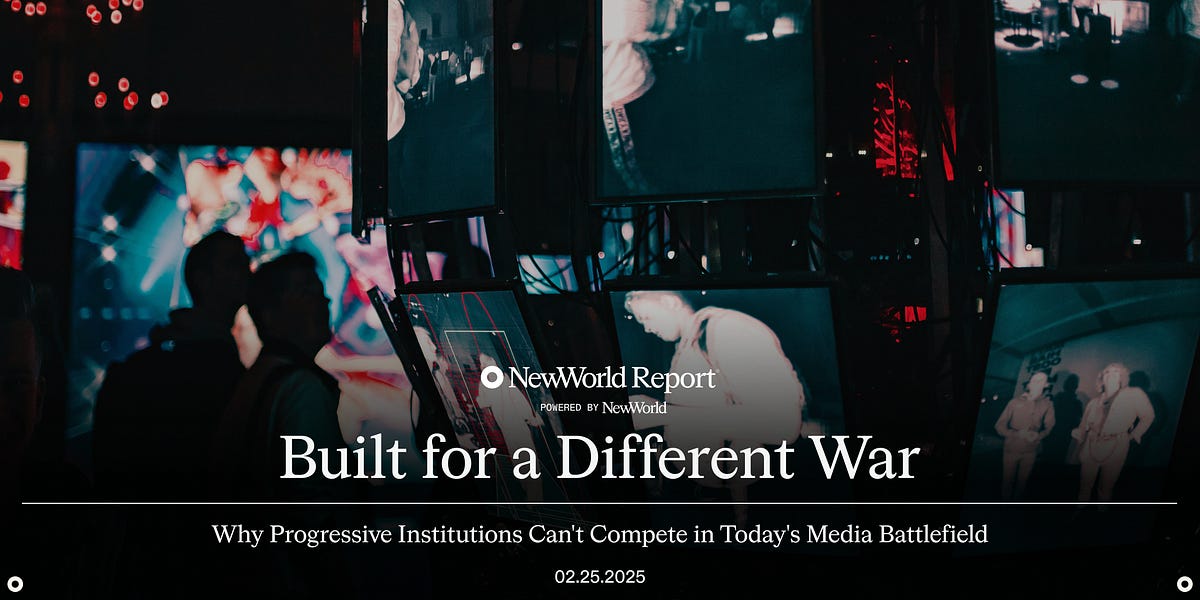
Built For a Different War

Theme: Climate & Ecology, Culture change, Economy, Election24, Philanthropy, Reactionary, Social Justice

Narrative work type: Narrative Strategy, Tactics

As the word ‘advocacy’ is banned from academic papers in the US, Banks reflects on how “the old pathways to influence are broken” with an instructive critique of progressives’ failure in “the battle for the nation’s conscience and culture”, as it continues to play by “the old rules.” “The progressive movement continues to pour resources into outdated influence tactics – broadcast advertising, performance marketing, media relations teams, policy shops, and think tanks – while the right has spent decades methodically building a sprawling ecosystem of decentralised (but powerfully coordinated) narrative infrastructure… Many progressives still think their problem is messaging: crafting the perfect slogan, landing the right talking point, tweaking the framing to be more ‘persuasive.’ But the real challenge is distribution.” Banks offers three steps for developing the essential “strategies that move the majority of people, on the platforms where they actually spend their time”.

Author: Andre Banks; New World Report

Passing in the Dark: Making Visible Philanthropy’s Hidden and Conflicting Mental Models for Systems Change

Theme: Philanthropy

Narrative work type: Deep narrative, Tactics

“The increasing focus on systems change has been a paradigm shift, fundamentally affecting how foundations approach social change, their underlying assumptions, and their ideas about the predictability of change… This perspective has required changes in philanthropic practices and led foundations to see themselves as actors in, and influencers of, systems… But as strategists and evaluators, we see many foundations ignoring some basic truths.” The authors propose that there are two mental models of systems change at play: ‘Systems Dynamics’ (familiar, predictable) and ‘Systems Emergence’ (unfamiliar, experimental), which they explore by outlining examples of strategies that use each one, offering tools for making them practical. They conclude that “neither of the systems-change mental models is inherently better,” but “if we do not make our models visible and align our practices to them, then unintentional disconnects will occur and our work will suffer.”

Author: Jewlya Lynn, Julia Coffman; The Foundation Review, Center for Evaluation Innovation

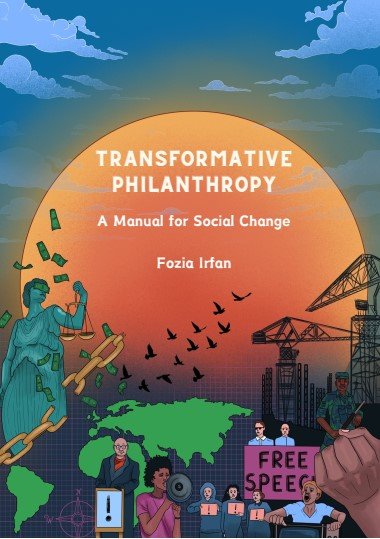
Transformative Philanthropy: A Manual For Social Change

Theme: Culture change, Philanthropy, Social Justice

Narrative work type: Narrative Strategy, Tactics

“I was privileged to meet some of the most powerful and ambitious funders and changemakers in the US and witness how they implemented their vision and values, in a way which was profoundly humbling and moving. Day after day, I sat with these unapologetically bold and brilliant philanthropy practitioners and questioned them about their philosophy, their methodology, their grantmaking and their aims – this is an attempt to capture and share that wisdom with practitioners here in the UK… The critical issues facing our communities are too important and the need too urgent, to continue to carry out philanthropy in an ad hoc approach – we need to have a cohesive and ambitious vision, a focus on social justice and greater boldness in our aims… to see philanthropy as more than a transactional act of giving, and see it instead as a profound catalyst for social change.”

Author: Fozia Irfan; Why Philanthropy Matters, Churchill Fellowship

The Assumptions That Underpin Climate Philanthropy: A Call for Debate

Theme: Climate & Ecology, Philanthropy

Narrative work type: Narrative Strategy, Tactics

Is philanthropy helping perpetuate the very crisis it sets out to solve? When “good quality empirical evidence of the effectiveness of philanthropic strategies is, overall, very scanty”, this can be hard to figure out. What does seem clear is that “everyone now claims to seek ‘systems change’ but…focuses on the outputs from the system – the mitigation of carbon emissions, perhaps through technological change or policy shifts, rather than examining the system itself." And so “by failing to question the existing system, the ultimate effect of contemporary philanthropy may be covertly to reaffirm and perpetuate the beliefs and mechanisms that have produced the climate crisis.”

Author: Carne Ross; Culture Hack Labs

Convenings, Cohorts + Communities: Notes On So-called “Impact” Gatherings

Theme: Climate & Ecology, Culture change, Economy, Philanthropy, Social Justice

Narrative work type: Tactics

“How we gather people matters deeply. Convenings, circles, groups and communities are the engines of change – if done skillfully and intentionally... We are in-between paradigms, between older and more emergent, newer formats… The previous, established rules and models of conferences, summits and events are getting blown up and replaced with an array of experiences, interventions, connectivity practices and celebrations to foster deeper engagement and more substantial change work… This is the time to creatively, thoughtfully and carefully consider how we design and foster our communities of impact.“ Lertzman offers ten learnings from her recent experiences, along with a list of practical recommendations for impact convenors and curators.

Author: Renee Lertzman; Becoming Guides

Towards a New Philanthropy

Theme: Gaza, Philanthropy, Social Justice

Narrative work type: Tactics

“Grassroots movements are un-earthing and naming the ways in which militarism, capitalist extraction, and imperialist expansion wreak havoc on so many lives in so many places… Everywhere we look the institutions, frameworks, and ideologies we have built are being contrasted in real time with a live-streamed genocide against which the shallow promise of international human rights instruments and philanthropic funding are no match… Philanthropy has ultimately failed to truly grapple with underlying questions of power –– and ultimately the term of liberation… We have as a sector reduced the political to the technical, leading with the performance of accountability whilst displacing the politics of liberation to another conversation, for another day… Do we side with those who continue to hoard power to extract profit off of human lives, or do we choose the path of the people and all those rising up to demand an end to this horror? Do we choose to usher in a world of safety, dignity, and justice for all?”

Author: Funders4Palestine; The Forge

The World is In Crisis: Here’s Why

Theme: Climate & Ecology, Culture change, Economy, Philanthropy, Social Justice

Narrative work type: Deep narrative, Insight

A sober assessment of our predicament, based on extensive research with leading scientists. “The future of human civilisation is touted to be dematerialised. Not only are we going to decarbonise our economies, we’re also going to dematerialise them. This, of course, is impossible… There are not enough batteries, or stuff to make batteries. There are limits to growth; everything must decay for life to go on. Traditions of Western thought have disavowed this universal truth, creating eternal homes in sky kingdoms where man basks in his purest form having freed himself from the profanity of the living world. These thoughts live on in investment funds which are throwing money at dematerialising the human existence, creating machines within which our consciousness can live forever, hurtling through space and time – a meaningless juncture without a body to experience it.” Also hear.

Author: Rachel Donald; Planet: Critical

  • Page 1
  • Page 2
  • Page 3
  • Go to Next Page »

Footer

Get the latest narrative insights, collected and delivered to your inbox, every two weeks

SUBSCRIBE

Questions, comments, or suggestions? Contact us

We are supported by:

The JJ Charitable Trust

Calouste Gulbenkian Foundation

  • Privacy Policy
We use cookies on our website. By clicking “Accept”, you consent to the use of the cookies.
Accept
Read our privacy policy for more details.
Manage consent

Privacy Overview

This website uses cookies to improve your experience while you navigate through the website. Out of these, the cookies that are categorized as necessary are stored on your browser as they are essential for the working of basic functionalities of the website. We also use third-party cookies that help us analyze and understand how you use this website. These cookies will be stored in your browser only with your consent. You also have the option to opt-out of these cookies. But opting out of some of these cookies may affect your browsing experience.
Necessary
Always Enabled
Necessary cookies are absolutely essential for the website to function properly. These cookies ensure basic functionalities and security features of the website, anonymously.
CookieDurationDescription
cookielawinfo-checkbox-analytics11 monthsThis cookie is set by GDPR Cookie Consent plugin. The cookie is used to store the user consent for the cookies in the category "Analytics".
cookielawinfo-checkbox-functional11 monthsThe cookie is set by GDPR cookie consent to record the user consent for the cookies in the category "Functional".
cookielawinfo-checkbox-necessary11 monthsThis cookie is set by GDPR Cookie Consent plugin. The cookies is used to store the user consent for the cookies in the category "Necessary".
cookielawinfo-checkbox-others11 monthsThis cookie is set by GDPR Cookie Consent plugin. The cookie is used to store the user consent for the cookies in the category "Other.
cookielawinfo-checkbox-performance11 monthsThis cookie is set by GDPR Cookie Consent plugin. The cookie is used to store the user consent for the cookies in the category "Performance".
viewed_cookie_policy11 monthsThe cookie is set by the GDPR Cookie Consent plugin and is used to store whether or not user has consented to the use of cookies. It does not store any personal data.
Functional
Functional cookies help to perform certain functionalities like sharing the content of the website on social media platforms, collect feedbacks, and other third-party features.
Performance
Performance cookies are used to understand and analyze the key performance indexes of the website which helps in delivering a better user experience for the visitors.
Analytics
Analytical cookies are used to understand how visitors interact with the website. These cookies help provide information on metrics the number of visitors, bounce rate, traffic source, etc.
Advertisement
Advertisement cookies are used to provide visitors with relevant ads and marketing campaigns. These cookies track visitors across websites and collect information to provide customized ads.
Others
Other uncategorized cookies are those that are being analyzed and have not been classified into a category as yet.
SAVE & ACCEPT