• Skip to primary navigation
  • Skip to main content
  • Skip to footer
Inter-Narratives Community

Inter-Narratives Community

  • Library
  • Sessions
  • Priorities
  • About
  • Subscribe

Social Justice

Library

Every two weeks we send out a newsletter full of narrative ideas and resources. We’ve catalogued these ideas by theme and category, which you can search below:


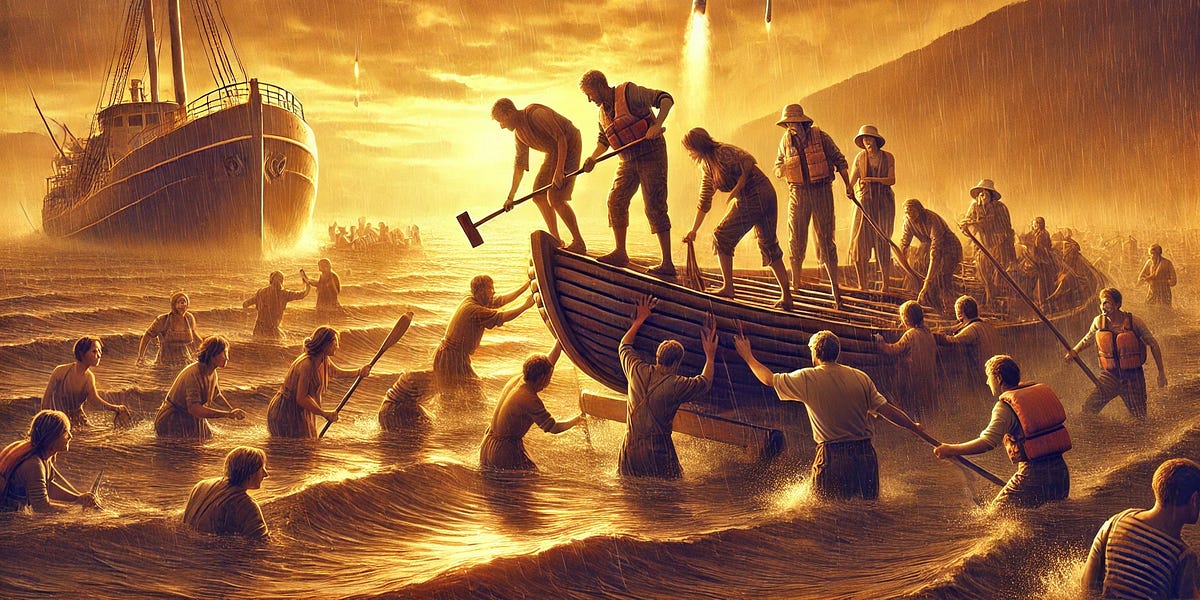
When History Overflows, Build a Lifeboat

Theme: Climate & Ecology, Economy, Social Justice

Narrative work type: Framing, Tactics

“Instead of thinking of our times as Volatile, Uncertain, Complex and Ambiguous (ie., VUCA, an older framework that arose in the late 1980s)… we need to see ourselves as having entered a phase change where things are boiling… Brittle, Anxious, Nonlinear and Incomprehensible (BANI)… Brittle gets countered by Bendable, as in flexibility and resilience, such as alternative sourcing and disaster plans. Anxiety can be met by Acceptance, empathy for what others experience, and an attempt not to use anger and fear to respond to anger and fear. Nonlinearity needs Neuroflexibility, the capacity to improvise, think critically, and reject scripted responses. And we can push back against Incomprehensibility with Inclusion of multiple, diverse perspectives and ideas… The waves of change that are coming are too big for any of us to stop. So build lifeboats: build community, strengthen friendships, and look for ways to involve people different than just your own tribe in shared activity.”

Author: Micah L. Sifry; The Connector

Convenings, Cohorts + Communities: Notes On So-called “Impact” Gatherings

Theme: Climate & Ecology, Culture change, Economy, Philanthropy, Social Justice

Narrative work type: Tactics

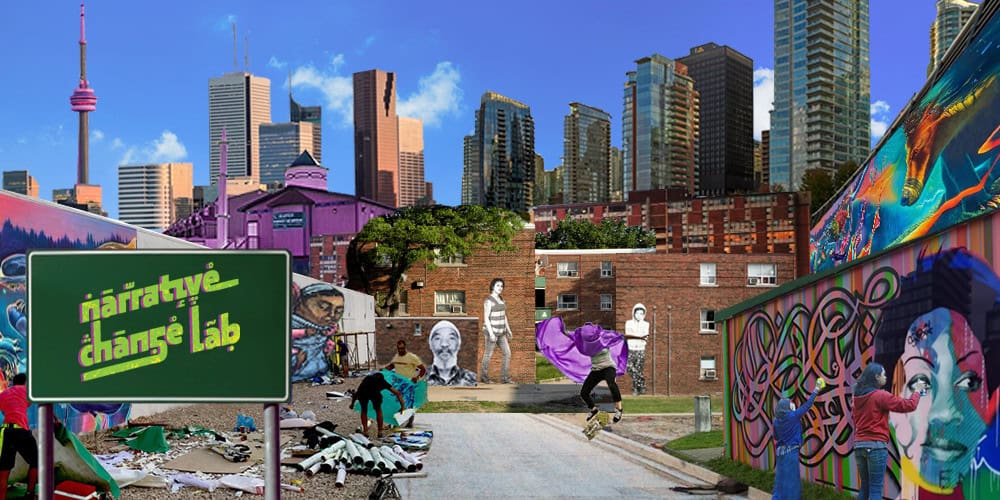
“How we gather people matters deeply. Convenings, circles, groups and communities are the engines of change – if done skillfully and intentionally... We are in-between paradigms, between older and more emergent, newer formats… The previous, established rules and models of conferences, summits and events are getting blown up and replaced with an array of experiences, interventions, connectivity practices and celebrations to foster deeper engagement and more substantial change work… This is the time to creatively, thoughtfully and carefully consider how we design and foster our communities of impact.“ Lertzman offers ten learnings from her recent experiences, along with a list of practical recommendations for impact convenors and curators.

Author: Renee Lertzman; Becoming Guides

Israel Has Made Trauma A Weapon Of War

Theme: Gaza, Reactionary, Social Justice

Narrative work type: Deep narrative, Tactics

“What is the line between commemorating trauma and cynically exploiting it? Between memorialization and weaponization? What does it mean to perform collective grief when the collective is not universal, but rather tightly bound by ethnicity?… Israel is right now in the grips of a nuclear-armed colonial revenge frenzy in the lineage of earlier colonial punitive expeditions, ones that also used art and collective sorrow as potent weapons of annihilation.⁠⁠ Identifying these deep historical throughlines – what the UCLA Holocaust scholar Michael Rothberg has termed ‘multidirectional memory’ – is work of re-membering, and it holds out our best hope of exiting what increasingly feels like an endlessly recurrent genocide loop.”

Author: Naomi Klein; The Guardian

Towards a New Philanthropy

Theme: Gaza, Philanthropy, Social Justice

Narrative work type: Tactics

“Grassroots movements are un-earthing and naming the ways in which militarism, capitalist extraction, and imperialist expansion wreak havoc on so many lives in so many places… Everywhere we look the institutions, frameworks, and ideologies we have built are being contrasted in real time with a live-streamed genocide against which the shallow promise of international human rights instruments and philanthropic funding are no match… Philanthropy has ultimately failed to truly grapple with underlying questions of power –– and ultimately the term of liberation… We have as a sector reduced the political to the technical, leading with the performance of accountability whilst displacing the politics of liberation to another conversation, for another day… Do we side with those who continue to hoard power to extract profit off of human lives, or do we choose the path of the people and all those rising up to demand an end to this horror? Do we choose to usher in a world of safety, dignity, and justice for all?”

Author: Funders4Palestine; The Forge

The World is In Crisis: Here’s Why

Theme: Climate & Ecology, Culture change, Economy, Philanthropy, Social Justice

Narrative work type: Deep narrative, Insight

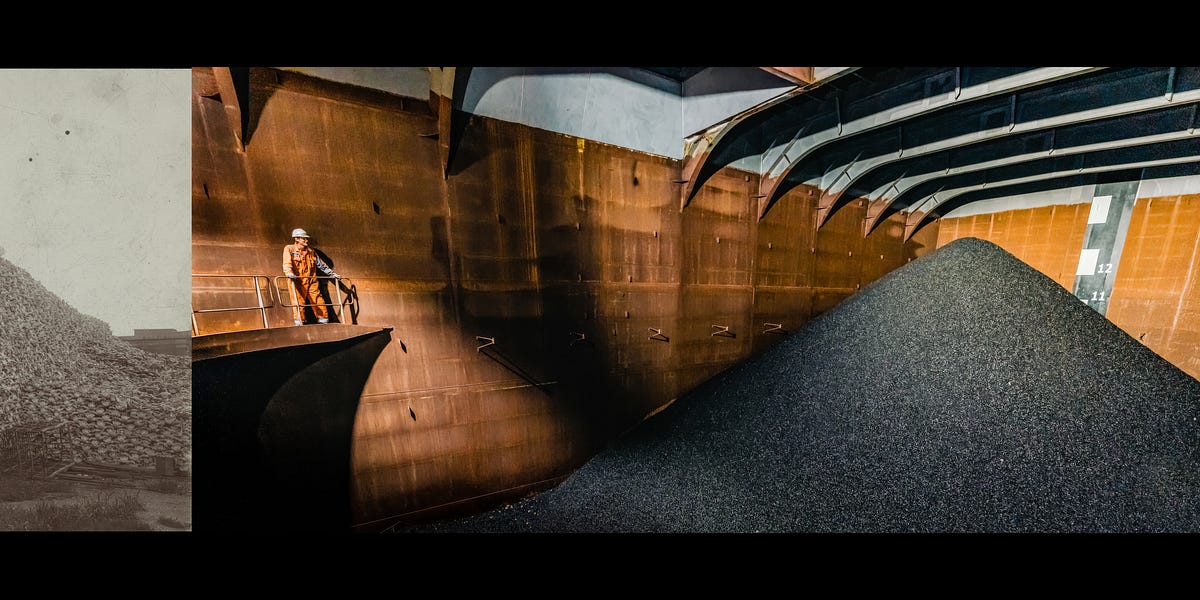
A sober assessment of our predicament, based on extensive research with leading scientists. “The future of human civilisation is touted to be dematerialised. Not only are we going to decarbonise our economies, we’re also going to dematerialise them. This, of course, is impossible… There are not enough batteries, or stuff to make batteries. There are limits to growth; everything must decay for life to go on. Traditions of Western thought have disavowed this universal truth, creating eternal homes in sky kingdoms where man basks in his purest form having freed himself from the profanity of the living world. These thoughts live on in investment funds which are throwing money at dematerialising the human existence, creating machines within which our consciousness can live forever, hurtling through space and time – a meaningless juncture without a body to experience it.” Also hear.

Author: Rachel Donald; Planet: Critical

The Permacrisis is Making the Public Sector Unaffordable

Theme: Economy, Social Justice

Narrative work type: Deep narrative, Insight

“Over coming decades, government spending is set to rise from 45% of GDP to 60%. Government debt from 98% of GDP to over 300%. The cause? A combination of climate change, economic shocks, international conflict, an ageing population, poor population health and persistently weak productivity. It is difficult to overstate the significance of this. It shows that our society, built on consistent economic growth providing reliable tax revenues to fund state-delivered public services is no longer sustainable. The world we have built and come to rely on since at least 1945 is over… we need new thinking and practice in every area of life well beyond the realm of state action. Currently, that is happening only at the margins. It needs to become mainstream rapidly.”

Author: Adam Lent

Alternative Cultures Are Beautiful and Important. They’re Also Not Enough.

Theme: Climate & Ecology, Culture change, Economy, Social Justice

Narrative work type: Deep narrative, Tactics

“To believe that demonstrating alternatives to modern industrial capitalism will result in the end of that system is to ignore power… whenever the dominant culture we live in comes into contact with these cultures, it destroys them… empires cannot allow alternatives to exist. If they do, they represent a threat… alternatives — at best — allow us to hold some small pieces of ground while conceding elsewhere… They are defensive… I believe we must move from building alternative cultures to building oppositional cultures. Permaculture movements, Transition Towns, ecovillages, and community land trusts can and must be cultures of resistance.”

Author: Max Wilbert, Biocentric

Funding Narrative Change

Theme: Climate & Ecology, Culture change, Economy, Philanthropy, Social Justice

Narrative work type: Deep narrative, Narrative Strategy, Tactics

A lot is being written about how to fund narrative change work effectively at the moment. If you hadn’t already seen that, or would like a refresher, this is helpful. It asks: “what can we do to capture attention and meaningfully shift the mindsets on our issues? And how can we do that in a way that prioritizes shifting narrative power to the groups affected by the issues we’re talking about?” In answering them, Palassio references Jody Myrum’s articulation of a now familiar refrain: “changing beliefs and behaviors at scale cannot be achieved by a single movement, organization, or campaign. Narrative change is a fundamentally collective endeavor, and the transformation we seek to achieve requires a broad set of actors to work together over time to advance a shared vision.”

Author: Christina Palassio; The Philanthropist

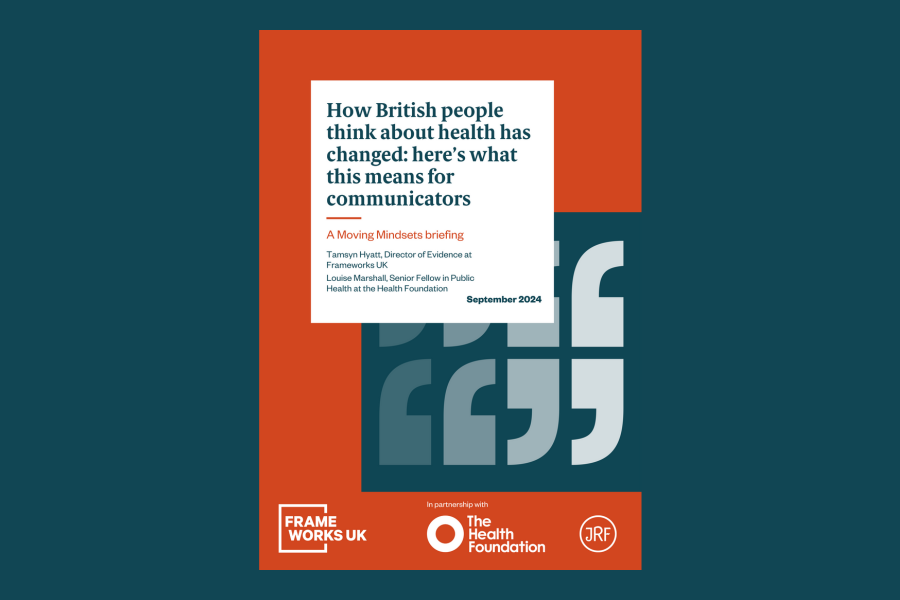
Moving Mindsets: How British People Think About Health Has Changed

Theme: Care, Climate & Ecology, Social Justice

Narrative work type: Framing, Messaging, Narrative Strategy

Reveals that “we are at an important inflection point. More collective mindsets on health are emerging and old mindsets are being applied in new, more systemic ways. Over the last six years, the way we think about health in the UK has changed.” This has implications for communicators, which are explored in detail, but in brief: “1) Position public health asks as national initiatives and needs. 2) Reinforce the idea that when all of us have what we need to be healthy, our communities thrive. 3) Use an expansive, inclusive definition of ‘nation.’” (Part of the Moving Mindsets programme)

Author: Tamsyn Hyatt, Louise Marshall; Frameworks UK

Organising Abuelos

Theme: Culture change, Social Justice

Narrative work type: Deep narrative, Narrative Strategy, Tactics

“A living testament to the Caribbean ethos of making much from little, turning scarcity into abundance through collective ingenuity, community, reciprocity and love… Resistance always surfaces from the underbelly. The infrastructures we need will emerge from the grassroots and set precedence for the future of cultural life. For this to be a sustained, structural shift in power, what resources and infrastructures do we need to grow and build? How can this cultural power be rooted in and held across a community, rather than being used to leverage individuals? How can our contributions as artists and cultural workers transcend symbolic, identitarian work that, while often a beautiful gesture, fails to invoke collective, structural change?” (Also see details of their events below)

Author: MAIA

The Collective Imagination Practices Toolkit

Theme: Climate & Ecology, Economy, Social Justice

Narrative work type: Deep narrative, Tactics

“Tools from Collective Imagination practitioners around the world, for anyone who wants to build the capacity to explore and learn ways of creating better, more hopeful futures, together.” Includes talks, frameworks, embodied practices, spatial practices, ecological practices, and temporal practices. “If we are to build alternative futures, we must collectively untether from entrenched ideas and start from a very different foundation. Collective Imagination work is the soil upon which that foundation is built. It enables us to engage with and embody different perspectives, weave together diverse perceptions and worldviews, and mobilise to take action.”

Author: JRF Emerging Futures

A Field Initiative Built on Trust

Theme: Climate & Ecology, Culture change, Economy, Philanthropy, Social Justice

Narrative work type: Narrative Strategy, Tactics

In 2020 a gathering of strategists developed the shared the goal of “accelerating a shift in worldview from domination to collaboration, care, and interdependence”. Their collective vision was documented in the report Celestial Navigation: How to Fund Culture Change in the U.S. From there, The Constellations Culture Change Fund & Initiative, housed at The Center for Cultural Power, was born, and since 2020 they have raised $13M and redistributed over $7.2M to build BIPOC-led narrative and cultural power in regions across the country. They also work from a shared “Constellations Narrative System… a collection of values and deep narratives from the field that drive and support alignment across our partners.”

Author: Trust-based Philanthropy Project (US)

  • « Go to Previous Page
  • Page 1
  • Interim pages omitted …
  • Page 9
  • Page 10
  • Page 11
  • Page 12
  • Page 13
  • Interim pages omitted …
  • Page 40
  • Go to Next Page »

Footer

Get the latest narrative insights, collected and delivered to your inbox, every two weeks

SUBSCRIBE

Questions, comments, or suggestions? Contact us

We are supported by:

The JJ Charitable Trust

Calouste Gulbenkian Foundation

  • Privacy Policy
We use cookies on our website. By clicking “Accept”, you consent to the use of the cookies.
Accept
Read our privacy policy for more details.
Manage consent

Privacy Overview

This website uses cookies to improve your experience while you navigate through the website. Out of these, the cookies that are categorized as necessary are stored on your browser as they are essential for the working of basic functionalities of the website. We also use third-party cookies that help us analyze and understand how you use this website. These cookies will be stored in your browser only with your consent. You also have the option to opt-out of these cookies. But opting out of some of these cookies may affect your browsing experience.
Necessary
Always Enabled
Necessary cookies are absolutely essential for the website to function properly. These cookies ensure basic functionalities and security features of the website, anonymously.
CookieDurationDescription
cookielawinfo-checkbox-analytics11 monthsThis cookie is set by GDPR Cookie Consent plugin. The cookie is used to store the user consent for the cookies in the category "Analytics".
cookielawinfo-checkbox-functional11 monthsThe cookie is set by GDPR cookie consent to record the user consent for the cookies in the category "Functional".
cookielawinfo-checkbox-necessary11 monthsThis cookie is set by GDPR Cookie Consent plugin. The cookies is used to store the user consent for the cookies in the category "Necessary".
cookielawinfo-checkbox-others11 monthsThis cookie is set by GDPR Cookie Consent plugin. The cookie is used to store the user consent for the cookies in the category "Other.
cookielawinfo-checkbox-performance11 monthsThis cookie is set by GDPR Cookie Consent plugin. The cookie is used to store the user consent for the cookies in the category "Performance".
viewed_cookie_policy11 monthsThe cookie is set by the GDPR Cookie Consent plugin and is used to store whether or not user has consented to the use of cookies. It does not store any personal data.
Functional
Functional cookies help to perform certain functionalities like sharing the content of the website on social media platforms, collect feedbacks, and other third-party features.
Performance
Performance cookies are used to understand and analyze the key performance indexes of the website which helps in delivering a better user experience for the visitors.
Analytics
Analytical cookies are used to understand how visitors interact with the website. These cookies help provide information on metrics the number of visitors, bounce rate, traffic source, etc.
Advertisement
Advertisement cookies are used to provide visitors with relevant ads and marketing campaigns. These cookies track visitors across websites and collect information to provide customized ads.
Others
Other uncategorized cookies are those that are being analyzed and have not been classified into a category as yet.
SAVE & ACCEPT