• Skip to primary navigation
  • Skip to main content
  • Skip to footer
Inter-Narratives Community

Inter-Narratives Community

  • Library
  • Sessions
  • Priorities
  • About
  • Subscribe

Social Justice

Library

Every two weeks we send out a newsletter full of narrative ideas and resources. We’ve catalogued these ideas by theme and category, which you can search below:


The Charity Sector Has an Anti-Palestinian Racism Problem

Theme: Social Justice

Narrative work type: Deep narrative, Insight, Issue narrative

“As we continue to see heartbreaking and harrowing images of death and destruction coming out of Gaza, so called ‘neutrality’ is no longer a credible option for charity leaders. Staying quiet in the face of genocide means normalising it, and charities are failing their charitable missions by not standing with the people of Palestine… 81% of staff reported that they are dissatisfied with their organisation’s response (or lack thereof) to Gaza. With a staggering 50% of staff saying they are “extremely disappointed” with their organisation’s handling of the situation in Gaza… The charity sector must ask itself honestly - does it see Palestinians as human beings and is it concerned about their suffering? The people who responded to our survey are the future of the sector, and it is time for the leaders of our charities to stand alongside them and with the people of Palestine.”

Author: Charity So White

COP29 Wasn’t About Climate

Theme: Climate & Ecology, Economy, Social Justice

Narrative work type: Deep narrative, Insight, Issue narrative

“It was about an economic and geopolitical hierarchy that is not supposed to be disturbed… The Global North knows very well that real transformative climate finance will actually unleash a tremendous development potential in the Global South, and that will disrupt the global economic and geopolitical hierarchy, which is unacceptable for the Global North. That is the bottom line. It's a colonial mentality dressed up in greenwashed diplomatic violence… The Global South recognises that we need to create a geopolitical leverage to pressure the historic polluters to act differently…(it) is not asking for charity and is not playing the victim. We are demanding payments for a legitimate climate debt… We are the global majority. We can leverage the complementarity of our resources and capabilities to impose a new international economic order of justice, peace, and prosperity.” A strategy will follow; see a quick video explanation of the ‘Bargain of the Century’ at the end in the meantime. Also see.

Author: Fadhel Kaboub; Global South Perspectives

The Liberal Model is Blocking Real Climate Action

Theme: Climate & Ecology, Economy, Social Justice

Narrative work type: Narrative Strategy, Tactics

“Christopher Shaw offers a compelling critique of the prevailing liberal narratives regarding climate change”, which “frequently obstruct the development of more radical, transformative responses that are essential for resolving the current policy gridlock on reducing global greenhouse gas emissions.“ He focuses on ‘five liberal climate guardrails’, which “construct a future that is politically, morally, and economically exactly the same as the life-destroying liberalism of today”. These are: “1. Climate change is not a challenge to individualism; 2. The liberal construction of climate change is universally true; 3. Climate change is not a historical phenomenon; 4. We have technologies to solve climate change; 5. New stories will save us.” Overall he “makes a strong case that it is imperative to engage in public discourse regarding the prospects of liberalism to help us navigate the intricacies of climate action in a manner that promotes sustainability, justice, and equity.”

Author: Sibo Chen (re: Christopher Shaw); LSE Book Review

The Starkest Collapse Prognosis I’ve Heard

Theme: Climate & Ecology, Culture change, Economy, Social Justice

Narrative work type: Deep narrative, Tactics

An exploration of how the untreated root cause of our predicament – “the nature of how we relate to the planet and theorise value” – is presenting a “fork in the road.” Johar warns that it now our ‘duty‘ to avoid self-terminating runaway collapse, in favour of difficult-but-viable ‘slingshot economics’ pathways. Johar proposes the need for a profound transformation in perspective, from ‘bio-degradable to ‘bio-nutritious’; ‘power over’ to ‘care with’; towards ‘poly-infrastructure’ with ‘self sovereignty’; recognising that there is no ‘other’: “we're all implicated, and in that the only obligation is to move together.” For Johar, ‘re-animification’ or ‘re-agentification’ – recognising the vital agency of the rest of nature – is how we can handle otherwise-overwhelming complexity, an evolutionary hack we have lost but must retrieve now. He calls all of us now, in whatever work we do, to be paying close attention to the ‘dark matter’ that underpins our societies, and “expanding what it means to be human” to resist the terminal devaluing of the human by modern economics.

Author: Indy Johar, Sarah Wilson; Wild

An Emerging Third Option: Reclaiming Democracy from Dark Money & Dark Tech

Theme: Climate & Ecology, Economy, Social Justice

Narrative work type: Issue narrative, Narrative Strategy, Tactics

“For social systems to truly change we need to upgrade their underlying operating systems, that is, we need to cultivate not only what is growing ‘above the ground’, but also the conditions of social soil”, which are “the less visible inner conditions, what is beneath the surface, the quality of awareness (attention and intentions) and the quality of relationships that affect how we operate.” Scharmer argues for a “shift toward building collective capacity for bottom-up cross-sector innovation and transformation across places and regions... Leaning into, sensing, and actualising the emerging future” in a way that is “independent of” traditional politics. We’re all aware that in a world of “polarisation and absencing”, it’s hard to “hold the space for the activation of an entire ecosystem,” but Scharmer urges us to try, proposing three upgrades, seven practices, and three pathways to “cultivate the social soil” that he’ll explore further in later posts.

Author: Otto Scharmer; Field of the Future

To Give Up This World, To Have Many Others

Theme: Climate & Ecology, Culture change, Economy, Fascism, Social Justice

Narrative work type: Deep narrative, Tactics

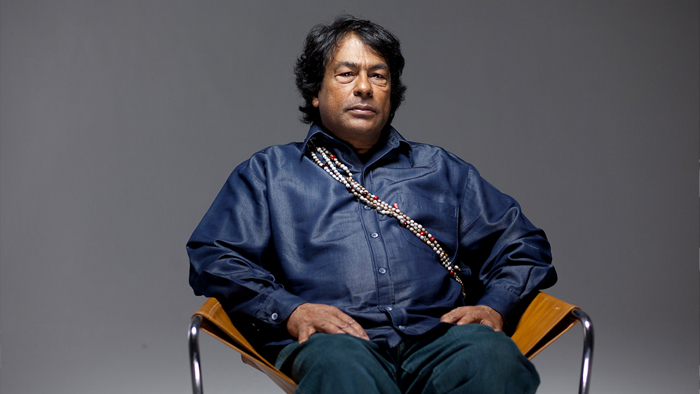
As part of Arika’s recent Episode 11 in Glasgow, ‘To End The World As We Know It’, a recording of a conversation on “the notion of pluriverses, and plural worldviews and life ways (unpicking) the colonial imposition of linear time or teleology and the fixation on historical continuity.” In which the artists discuss “Western society as being obsessed with merchandise, and the extent to which this has collapsed into the subject and the body, and what it means to invent a poetics capable of freeing us from the desire for merchandise,” exploring ways that “organisms, human and non-human, recognize their distinct poetics of life” and “how these work against capitalism and fascism, as a denunciation of political alliances, and maybe even of ‘politics’.”

Author: Ailton Krenak, Denise Ferreira da Silva, Amilcar Packer; Arika

Intergenerational Responsibility and Composting Our W.E.I.R.D S**t

Theme: Climate & Ecology, Culture change, Economy, Social Justice

Narrative work type: Deep narrative, Tactics

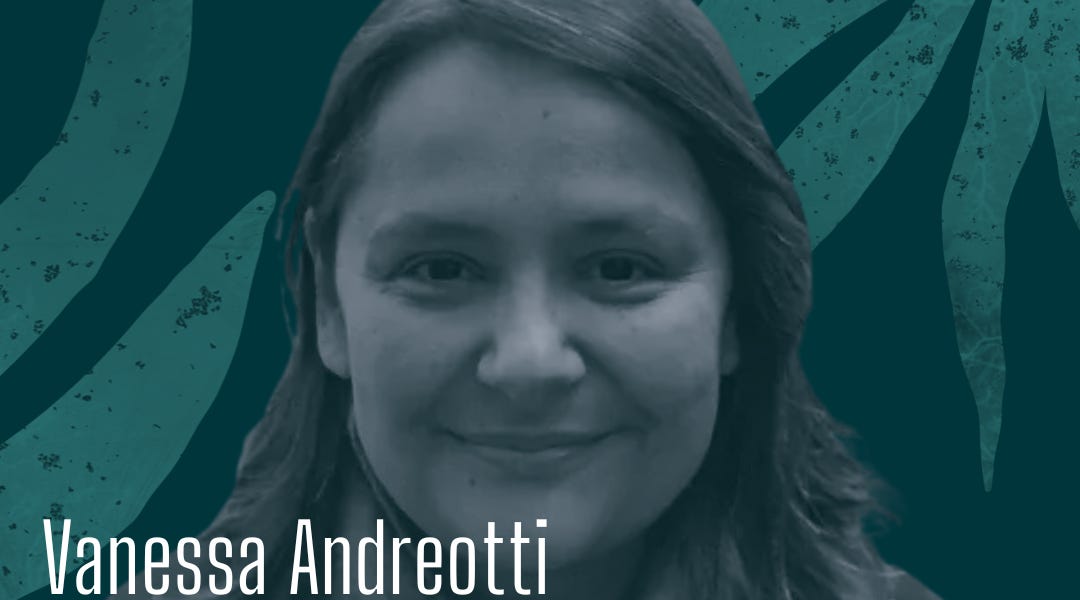
An exploration of “sitting with the shit”, as “Western Entitled Individualistic Reductionist and Delusional people,” encouraging an “opening up to the uncomfortable grief,” and a recognition that ‘composting’ is how we prepare the ground for something new. As Burgess describes “this is really a conversation about unlearning and learning in new ways,” and about how might we shift our orientation from “entitlement to more entitlements” to “responsibility to more responsibility,” in a way that is “centred in our entanglement with a living Earth.” Called to “absolutely reject colonial divisiveness, violence and the othering of some humans…to stand up for all life…and to see all life as sacred again,” we are offered a question to hold: “What if we could respond from a space of emotional sobriety, relational maturity, intellectual discernment, and intergenerational responsibility? What would we be doing? How would we be sending our time?”

Author: Vanessa Andreotti, Dan Burgess; Spaceship Earth Podcast

9 Dimensions for Evaluating How Art and Creative Practice Stimulate Societal Transformations

Theme: Climate & Ecology, Culture change, Economy, Social Justice

Narrative work type: Narrative Strategy, Tactics

“There is an urgent need to engage with deep leverage points in sustainability transformations – fundamental myths, paradigms, and systems of meaning making – to open new collective horizons for action. Art and creative practice are uniquely suited to help facilitate change in these deeper transformational leverage points. However, understandings of how creative practices contribute to sustainability transformations are lacking in practice and fragmented across theory and research”. The paper presents the ‘9 Dimensions Tool’, which “consists of three categories of change, and nine dimensions: changing meanings (embodying, learning, and imagining); changing connections (caring, organising, and inspiring); and changing power (co-creating, empowering, and subverting).” Includes analysis of its practical application across 20 projects.

Author: Various authors; Ecology & Society

Liberal Failures Demand a Realignment: Building a Left That Delivers

Theme: Economy, Election24, Fascism, Reactionary, Social Justice

Narrative work type: Deep narrative, Narrative Strategy, Tactics

“People are tired of being asked to settle for the same broken promises and status quo. How many times do we have to say it?… This is a pivotal time to consider a new economic order that prioritises economic equality, social programs, and taxing the damn rich… Our call to action is considering how we tell a salient story about a new economic order prioritising a working-class politic… Organising against the systems that oppress us every day, electing revolutionary leaders from within our communities, and tearing down the structures of capitalism, fascism, and colonialism… Our strength lies in our recognition of the interconnectedness of our struggles. The narrative we build must advance revolutionary values, dismantle hegemonic power, and disrupt the systems... This is the moment to reimagine a future beyond the oppressive systems that have held us captive.”

Author: Shanelle Matthews (US)

Trump’s America: The Fulcrum of a Global ‘Network War’ on Democracy

Theme: Climate & Ecology, Culture change, Economy, Election24, Reactionary, Social Justice

Narrative work type: Deep narrative, Insight, Narrative Strategy, Tactics

“Donald Trump’s victory is an inflection point – not merely for the future of American democracy, but for the future of the West, and the planet. The driving forces behind his re-election must be properly understood…there is a more alarming, overarching – and insidious – factor at play: a network of billionaires, think tanks and lobbying groups that believe, as does the Russian Government, that democracy must be destroyed… The liberal paradigm which has governed the growth of industrial civilisation is now increasingly embattled – and in many ways irrelevant… Either the status quo is defended and we end up moving inexorably into that rut, which ends with collapse; or we move forward to rebuild and redesign our societies in line with economic, energy, and ecological reality.” Also see.

Author: Nafeez Ahmed; Byline Times

What Do We Do Now?

Theme: Climate & Ecology, Culture change, Economy, Election24, Social Justice

Narrative work type: Narrative Strategy, Tactics

Four suggestions from the founder of UK-based Larger Us: “1. Don’t see ‘we’ as the left; 2. Empower young men; 3. Embrace relational activism; 4. Build power everywhere.” For the third, Evans says “two places we could start are with tackling loneliness, and bridging divides…loneliness can make us more self-centred, less empathetic, and more vulnerable to extremism - and hence that it’s something totalitarian regimes actively want”. And for the fourth: “a big part of what drives the process is stories. Stories that bring communities together, that keep us going as we come to terms with how much won’t go ‘back to normal’, and that over time help us to make sense of where we are, where we’re trying to get to, how to get there - and underneath it all, who we are… When we’re ready, there’s work to do.”

Author: Alex Evans; The Good Apocalypse Guide

Antidote

Theme: Climate & Ecology, Culture change, Economy, Social Justice

Narrative work type: Stories, Tactics

“All over the world ordinary people are coming together to do extraordinary things - to create better futures for themselves, their communities and the environment we all share.” Antidote is an effort to gather and share some these stories, which don’t usually make the news. “Stories that: 1. Address a basic essential monthly need for most people — food, housing, energy, transport, or community engagement; 2. Are accessible enough for most of us to participate in, ambitious enough to spread and create systemic change, and part of a network and movement that actually create the future the majority of people want to live in; 3. Increase connection between people and their basic needs, so they can better see and understand how to provide for their needs in ways that are good for them, good for the world, and good for other communities.”

Author: Rubber Republic, various

  • « Go to Previous Page
  • Page 1
  • Interim pages omitted …
  • Page 7
  • Page 8
  • Page 9
  • Page 10
  • Page 11
  • Interim pages omitted …
  • Page 40
  • Go to Next Page »

Footer

Get the latest narrative insights, collected and delivered to your inbox, every two weeks

SUBSCRIBE

Questions, comments, or suggestions? Contact us

We are supported by:

The JJ Charitable Trust

Calouste Gulbenkian Foundation

  • Privacy Policy
We use cookies on our website. By clicking “Accept”, you consent to the use of the cookies.
Accept
Read our privacy policy for more details.
Manage consent

Privacy Overview

This website uses cookies to improve your experience while you navigate through the website. Out of these, the cookies that are categorized as necessary are stored on your browser as they are essential for the working of basic functionalities of the website. We also use third-party cookies that help us analyze and understand how you use this website. These cookies will be stored in your browser only with your consent. You also have the option to opt-out of these cookies. But opting out of some of these cookies may affect your browsing experience.
Necessary
Always Enabled
Necessary cookies are absolutely essential for the website to function properly. These cookies ensure basic functionalities and security features of the website, anonymously.
CookieDurationDescription
cookielawinfo-checkbox-analytics11 monthsThis cookie is set by GDPR Cookie Consent plugin. The cookie is used to store the user consent for the cookies in the category "Analytics".
cookielawinfo-checkbox-functional11 monthsThe cookie is set by GDPR cookie consent to record the user consent for the cookies in the category "Functional".
cookielawinfo-checkbox-necessary11 monthsThis cookie is set by GDPR Cookie Consent plugin. The cookies is used to store the user consent for the cookies in the category "Necessary".
cookielawinfo-checkbox-others11 monthsThis cookie is set by GDPR Cookie Consent plugin. The cookie is used to store the user consent for the cookies in the category "Other.
cookielawinfo-checkbox-performance11 monthsThis cookie is set by GDPR Cookie Consent plugin. The cookie is used to store the user consent for the cookies in the category "Performance".
viewed_cookie_policy11 monthsThe cookie is set by the GDPR Cookie Consent plugin and is used to store whether or not user has consented to the use of cookies. It does not store any personal data.
Functional
Functional cookies help to perform certain functionalities like sharing the content of the website on social media platforms, collect feedbacks, and other third-party features.
Performance
Performance cookies are used to understand and analyze the key performance indexes of the website which helps in delivering a better user experience for the visitors.
Analytics
Analytical cookies are used to understand how visitors interact with the website. These cookies help provide information on metrics the number of visitors, bounce rate, traffic source, etc.
Advertisement
Advertisement cookies are used to provide visitors with relevant ads and marketing campaigns. These cookies track visitors across websites and collect information to provide customized ads.
Others
Other uncategorized cookies are those that are being analyzed and have not been classified into a category as yet.
SAVE & ACCEPT