• Skip to primary navigation
  • Skip to main content
  • Skip to footer
Inter-Narratives Community

Inter-Narratives Community

  • Library
  • Sessions
  • Priorities
  • About
  • Subscribe

Social Justice

Library

Every two weeks we send out a newsletter full of narrative ideas and resources. We’ve catalogued these ideas by theme and category, which you can search below:


In Praise of Collective Joy

Theme: Climate & Ecology, Culture change, Economy, Social Justice

Narrative work type: Tactics

Reflections from Counterpoints Arts biannual ‘Pop Culture & Social Change’ retreat at Dartington, which speak to the importance of collaboration and relationship-building, “because the work we do is interrelated and needs to be done through understanding what we all bring to our coalition.” A coalition which “cannot rely on one perfectly crafted, targeted, cultural intervention – there will be no single story, song, speech or screening that changes the course of history. The struggle will be long and arduous, and a 'popular front' is needed. Since the Community Council first met at the start of this year, we wished for our networks to get to know each other better, and Dartington felt like a great step towards mapping our convergences. Whether we look back at the retreat as a mere moment in time or the beginning of collective change remains to be seen, but we can hope that our interactions there may yet create lasting legacies.”

Author: Biz; Comic Relief, Counterpoints Arts

Changing Migration Narratives with Stories of Food, Kindness and Humanity

Theme: Social Justice

Narrative work type: Narrative Strategy

A review of the #StandUp4Migrants campaign, which has been running in Malaysia, Australia and India, including various tools and other resources that could be useful elsewhere. By blending traditional advocacy outreach with practical community engagement and bridge-building, focusing on “bringing migrants and locals together around shared values and interests to find common ground,” the campaign was able to foster the conditions for mindset-shift, orienting people towards an appreciation of common humanity. “What comes up constantly in hope-based workshops with migration activists is the need to talk about the things that make us all human: universal experiences like food, music and culture and the beautiful transformation that happens to open societies.”

Author: Thomas Coombes, Christina MacGillivray, Genevieve Sauberli; Hope-based Communication

The 48 Laws Of Power

Theme: Culture change, Reactionary, Social Justice

Narrative work type: Deep narrative, Insight, Tactics

An amusing critique of the infamous ‘autocracy-for-dummies’ manual, reportedly a favourite of Trump, Musk, Bannon, Putin etc., and how it came to be written. The cynicism that produced and pervades it is alarmingly cold-hearted, and includes advice like: “You must first attract attention. This you should do not through actions which are too clear and readable but through words which are hazy and deceptive. You must include two elements: on the one hand the promise of something great and transformative and on the other a total vagueness.” It is underpinned by ‘zero-sum ideology’ – the mistaken view that humans and the rest of nature evolve through conflict rather than mutual aid. This, the hosts argue, reflects and encourages the “uniquely American phenomenon that a lot of people view the world so adversarially that they are willing to forego helping people as long as that ensures that they can't be taken advantage of in some way.” An amusing critique of the infamous ‘autocracy-for-dummies’ manual, reportedly a favourite of Trump, Musk, Bannon, Putin etc., and how it came to be written. The cynicism that produced and pervades it is alarmingly cold-hearted, and includes advice like: “You must first attract attention. This you should do not through actions which are too clear and readable but through words which are hazy and deceptive. You must include two elements: on the one hand the promise of something great and transformative and on the other a total vagueness.” It is underpinned by ‘zero-sum ideology’ – the mistaken view that humans and the rest of nature evolve through conflict rather than mutual aid. This, the hosts argue, reflects and encourages the “uniquely American phenomenon that a lot of people view the world so adversarially that they are willing to forego helping people as long as that ensures that they can't be taken advantage of in some way.”

Author: If Books Could Kill

‘Capitalism’ Bonus: Live at Motorco

Theme: Economy, Social Justice

Narrative work type: Deep narrative, Tactics

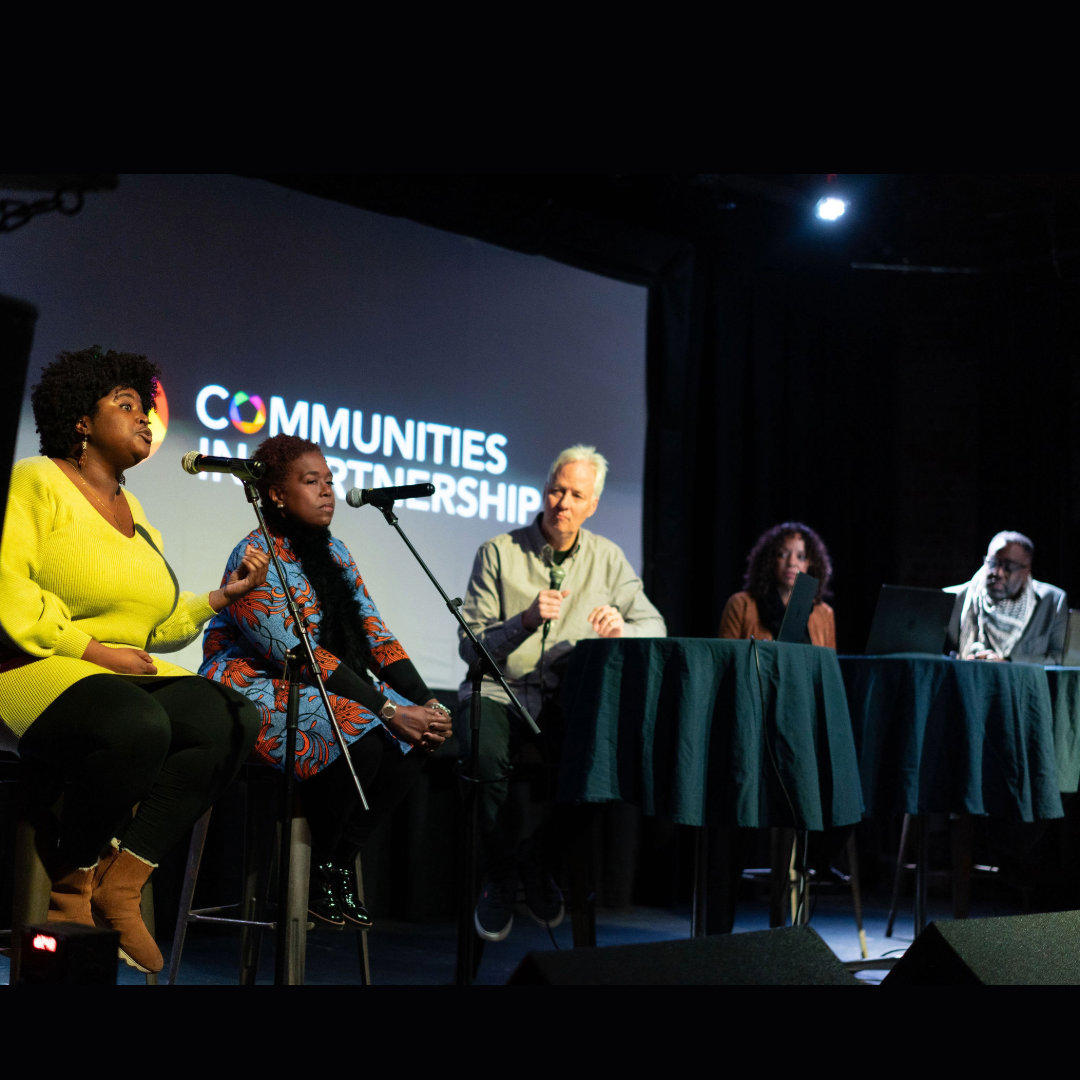
“Now what? Can we find hope and a way forward? In a live show taped December 5, 2024, at Motorco Music Hall in Durham, North Carolina, Season 7 co-hosts John Biewen and Ellen McGirt are joined by journalism professor, podcaster, and two-time Scene on Radio co-host Chenjerai Kumanyika. They discuss how to move toward a more democratic economy and society – with the live audience, and with Camryn Smith and Courtney Smith of Durham’s Communities in Partnership.” We hear about what it takes for ‘community-rooted’ action to be properly resourced, and are called to put trust and energy in the people on the front lines. “Literally, trust black women. Trust indigenous women. Trust women of color who are hard on the ground doing the work. Because we do 98% of the lion's share of the on the ground work, but we receive less than 3% of all philanthropic funding. Could you imagine what this nation would look like with us, properly supported, doing what we're doing now?”

Author: Scene On Radio

Beyond the Carbon Fixation: Pathways to Regenerative Futures

Theme: Climate & Ecology, Culture change, Economy, Social Justice

Narrative work type: Deep narrative, Insight, Narrative Strategy

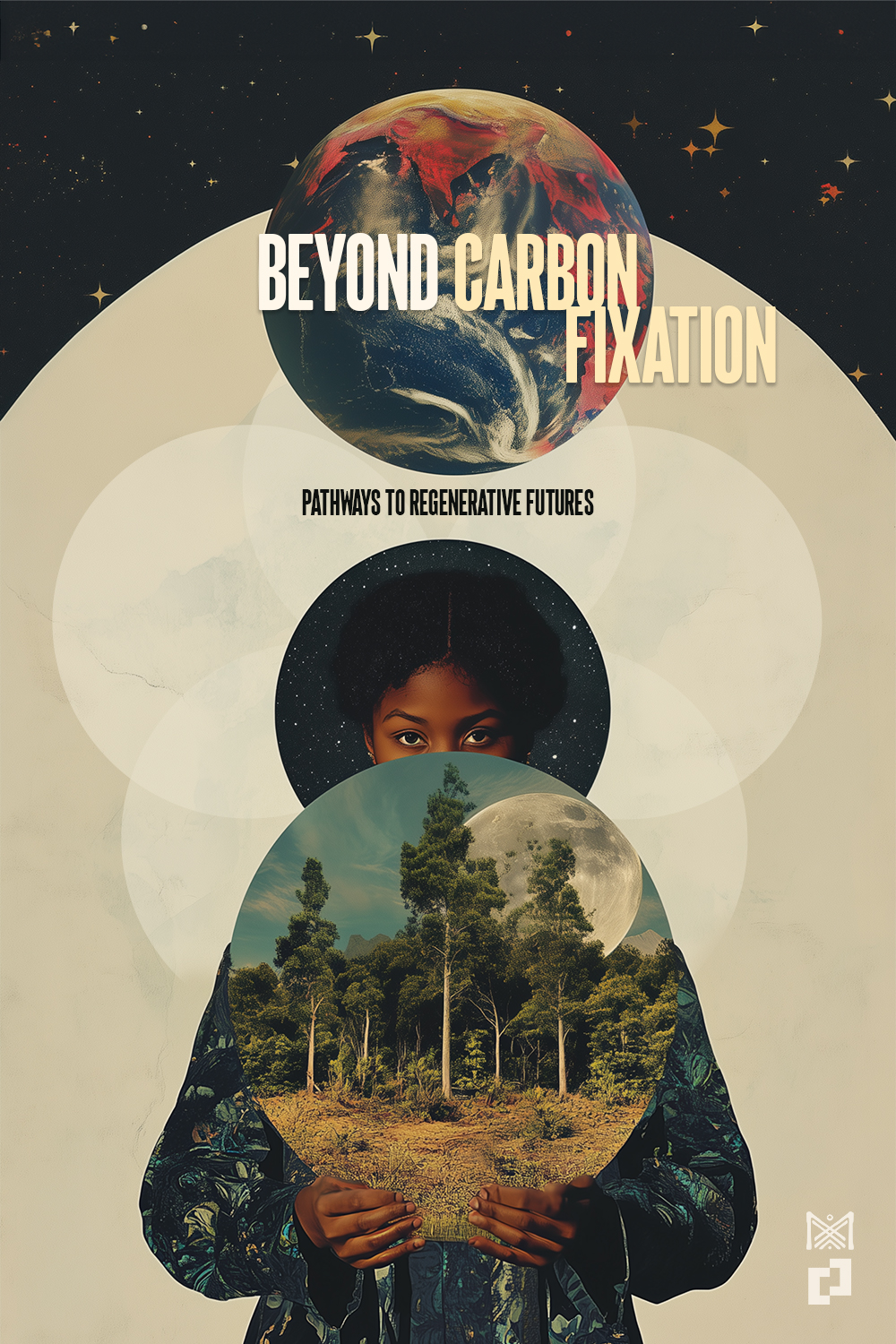
A new compilation of research, delivered in four parts with nine complementary articles, which serves as a “navigational tool” to show how “systems change emerges through practice, not just theory.” The authors work from the deep “roots of the metacrisis”, to look beyond “carbon-centered approaches to the climate crisis limited by reductionist metrics and market-driven solutions” and find different possibilities in already-existing pathways “embodied by living examples.” These pathways are intending to “liberate land, waters, ecosystems, and communities from the enclosures of capitalism and colonialism…rooted in justice, solidarity, community stewardship, regenerative economies, and shifts towards more ecological consciousness.” In particular, see their Narrative Analysis Summary.

Author: Culture Hack Labs

The Plan to Help Defend the Palestine Movement

Theme: Reactionary, Social Justice

Narrative work type: Insight, Tactics

“The Heritage Foundation is a conservative think-tank that has promoted far-right policy agenda in the U.S. for decades. Not surprisingly, its latest plan, Project Esther, is a frightening escalation of the ongoing rightwing campaign to launch coordinated efforts aimed at destroying progressive movements. While using anti-Palestinian racism to advance the far-Right’s dystopian plan for the future, Project Esther also explicitly plans to cynically use the Jewish American community to undermine the legitimate case for Palestinian freedom and drastically expand authoritarian politics… Supremacy anywhere is a threat to us all. In the face of mounting repression and threats from the far-Right Christian nationalists, we are undeterred in our commitment to fight for an end to this genocide and for Palestinian freedom. All of our futures depend on it.”

Author: Jewish Voice For Peace

Language and Violence

Theme: Climate & Ecology, Culture change, Economy, Social Justice

Narrative work type: Deep narrative, Framing

An exploration “from first principles” of the systemic nature of violence, “how it permeates the human project at every level, and how language is deployed to obfuscate, distract and even deny that which we bear witness to.” Covering different points in history, beginning with the Iberian conquest of the Americas, Amrith, author of The Burning Earth, and Donald reveal “the incontrovertible relationship between violence against the earth and violence against people”, and how “the justification to extract life from the non-human world inevitably justifies the hierarchies which then see the world’s most vulnerable human beings exploited and even killed.” We learn of the injustice with which not just modern capitalism, but “the human project” overall was built, and about the ideologies that have “justified rampant destruction and extraction”, considering how to imagine “a better world tomorrow with the political language the past has to offer.”

Author: Sunil Amrith, Rachel Donald; Planet: Critical

Post-election ’24 All-Star Special

Theme: Climate & Ecology, Culture change, Economy, Election24, Social Justice

Narrative work type: Deep narrative, Tactics

Host John Biewen gathers his co-pilots from recent seasons of Scene On Radio, which have covered capitalism, racism, sexism, and climate, to discuss the US election result. They share their analyses, worries and advice for how to respond, offering reassurance that we’re not starting from scratch. They encourage us to “turn to people in movements who are already working…find those people, amplify their stories, and make sure they continue to do the work.” They warn that “we can get into messaging and all these other tweaks, but at some point we're going to have to tackle the dominant understandings of how we understand the world…and if we don't get to that, you can do all the tweaking you want...but you're going to see the same cycle continue to play out.” One way to do this is to accept that ultimately, “we can only talk our way out of this…forming an empathic bond between two humans is the only way we have ever found to eventually change someone's mind.”

Author: Ellen McGirt, Chenjerai Kumanyika, Celeste Headlee, Amy Westervelt; Scene On Radio

What Happened In France (in the Summer)?

Theme: Election24, Fascism, Social Justice

Narrative work type: Insight, Messaging, Tactics

A reflection on the snap election this summer in France, when the left-leaning alliance rallied to resist the far right with a surprise “come-back” in the second vote. This offers specific lessons for resisting fascism, e.g. “we have to cast elections against authoritarian leaders as elections that are a fork in the road for two futures – not a competition between two existing agendas.” It also describes how its success was due to a rapid coordination that centred organisers – “people who wanted to do things” – and that by working from shared goals and messaging, this coordination across movements was able to reach a lot of people quickly, inviting them in to choose “care” instead of “hatred”, with the emphasis on what they were ‘for’, rather than just ‘against’.

Author: Sarah Durieux, Anat Shenker-Osorio; NEON

How to Get a White Supremacist to Leave the KKK

Theme: Social Justice

Narrative work type: Tactics

“What happens when an African American befriends members of the Ku Klux Klan? Daryl Davis has persuaded more than 200 white supremacists to leave groups like the KKK. He shares how his extraordinary journey began, what drives him to do this work, and what the rest of us can learn from his approach. Please be aware that this episode contains a description of a violent and racist incident and use of offensive racist language in that context.” Resonating with the advice: ‘don’t try to change people’s minds, help them to change their own’, Davis says “I did not convert anyone, I am the impetus for people to convert themselves,” by being “curious not furious”, and “offering a better perception” instead of “attacking their reality”.

Author: Daryl Davis; Larger Us, The Sacred

Decoupling The Good Life From Capitalism

Theme: Economy, Social Justice

Narrative work type: Deep narrative, Stories

Soon explores their experience of China, where unlike what we are told, “beneath the veneer of the new modernism and policy intervention, capitalism’s familiar cracks have emerged.” They see that “‘The Good Life’ created under the conditions of capitalism today, imposes, for many around the world, a fallacy of being able to truly meet our needs. Even if it does, it ends up being at the expense of others.” With a warning that unless we can address those being left behind by this fallacy, they will be “scooped up by harmful extremism — all under the illusion of care”, and that to offer “a meaningful alternative economic system, it is essential that we engage with what we dream of as ‘good lives‘ – the diverging stories, in their own framing and in their own language, of what this looks like to different people all around the world.”

Author: Miho Soon; Post Growth Institute

Liberation Stories

Theme: Climate & Ecology, Social Justice

Narrative work type: Narrative Strategy, Tactics

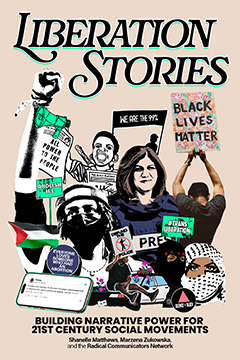
“Building Narrative Power for 21st-Century Social Movements” – a gathering of “some of today’s leading progressive and radical grassroots communicators, organisers, artists, visual storytellers, journalists, and academics combine their collective wisdom into a single volume. Featuring in-depth case studies of contemporary social justice movements and historical examples for understanding and challenging the dominant narratives across the globe, Liberation Stories distills successful theories, strategies, and tactics for anyone wanting to understand – and participate in – the diverse initiatives currently shaping our society. At a time when right-wing movements are on the rise globally – attacking our books, our bodies, and our systems of government – Liberation Stories offers a comprehensive tool for building the world we want.” Available summer 2025.

Author: Shanelle Matthews, Marzena Zukowska, RadComms; The New Press

  • « Go to Previous Page
  • Page 1
  • Interim pages omitted …
  • Page 6
  • Page 7
  • Page 8
  • Page 9
  • Page 10
  • Interim pages omitted …
  • Page 40
  • Go to Next Page »

Footer

Get the latest narrative insights, collected and delivered to your inbox, every two weeks

SUBSCRIBE

Questions, comments, or suggestions? Contact us

We are supported by:

The JJ Charitable Trust

Calouste Gulbenkian Foundation

  • Privacy Policy
We use cookies on our website. By clicking “Accept”, you consent to the use of the cookies.
Accept
Read our privacy policy for more details.
Manage consent

Privacy Overview

This website uses cookies to improve your experience while you navigate through the website. Out of these, the cookies that are categorized as necessary are stored on your browser as they are essential for the working of basic functionalities of the website. We also use third-party cookies that help us analyze and understand how you use this website. These cookies will be stored in your browser only with your consent. You also have the option to opt-out of these cookies. But opting out of some of these cookies may affect your browsing experience.
Necessary
Always Enabled
Necessary cookies are absolutely essential for the website to function properly. These cookies ensure basic functionalities and security features of the website, anonymously.
CookieDurationDescription
cookielawinfo-checkbox-analytics11 monthsThis cookie is set by GDPR Cookie Consent plugin. The cookie is used to store the user consent for the cookies in the category "Analytics".
cookielawinfo-checkbox-functional11 monthsThe cookie is set by GDPR cookie consent to record the user consent for the cookies in the category "Functional".
cookielawinfo-checkbox-necessary11 monthsThis cookie is set by GDPR Cookie Consent plugin. The cookies is used to store the user consent for the cookies in the category "Necessary".
cookielawinfo-checkbox-others11 monthsThis cookie is set by GDPR Cookie Consent plugin. The cookie is used to store the user consent for the cookies in the category "Other.
cookielawinfo-checkbox-performance11 monthsThis cookie is set by GDPR Cookie Consent plugin. The cookie is used to store the user consent for the cookies in the category "Performance".
viewed_cookie_policy11 monthsThe cookie is set by the GDPR Cookie Consent plugin and is used to store whether or not user has consented to the use of cookies. It does not store any personal data.
Functional
Functional cookies help to perform certain functionalities like sharing the content of the website on social media platforms, collect feedbacks, and other third-party features.
Performance
Performance cookies are used to understand and analyze the key performance indexes of the website which helps in delivering a better user experience for the visitors.
Analytics
Analytical cookies are used to understand how visitors interact with the website. These cookies help provide information on metrics the number of visitors, bounce rate, traffic source, etc.
Advertisement
Advertisement cookies are used to provide visitors with relevant ads and marketing campaigns. These cookies track visitors across websites and collect information to provide customized ads.
Others
Other uncategorized cookies are those that are being analyzed and have not been classified into a category as yet.
SAVE & ACCEPT