• Skip to primary navigation
  • Skip to main content
  • Skip to footer
Inter-Narratives Community

Inter-Narratives Community

  • Library
  • Sessions
  • Priorities
  • About
  • Subscribe

Social Justice

Library

Every two weeks we send out a newsletter full of narrative ideas and resources. We’ve catalogued these ideas by theme and category, which you can search below:


On Our Lives with the News

Theme: Climate & Ecology, Culture change, Economy, Social Justice

Narrative work type: Framing, Insight

A reflection on how mainstream news media has become so negative and unhelpful, and a suggestion for what to do now. Bornstein’s main recommendation, as a way to "make goodness as riveting as evil" is to engage people with curiosity. Because "we're wired to pay attention to threats, but we're also wired to love puzzles." So he suggests that we tell positive "How dunnit?" stories that present some positive event – a success in government or institutions, in the way that business is typically covered in the media, rather than just the failures – framed in a way that encourages people to be curious about how the success was achieved. For example: "how did this school actually increase the high school graduation rate when all the other schools with similar resources haven't been able to figure that one out?" They also explore a ‘Hippocratic Oath for Journalism’, which seeks to make media “radically helpful”.

Author: David Bornstein, Krista Tippett; On Being

The Answer to Trump is Revolutionary Love

Theme: Culture change, Social Justice

Narrative work type: Deep narrative, Narrative Strategy

Analysis of what “the shrieking migraine of Trumpism” reveals about our socioeconomic system: capitalism and authoritarianism “gel very well” – not capitalism and democracy; and the loudly-touted opposition between class and identity politics is encouraged, to distract from the reality that people’s needs and freedoms are so often a hindrance to the system’s central goal of making money “for those at the top”. What we need instead is “a lovely new economic system, one that is centred around the things that actually matter: our health, knowing that we are cared for, being close to the ones we love, knowing that we are safe, and that we have the freedom to express ourselves in all our glittering abundance,” which “requires taking love from the realm of the personal into the political.” The first step: “refuse to buy into the politics of hate and fear that the Trumps of the world are selling”, then “open our eyes to the politics of love and care already being practiced all around us, and join in where we can.”

Author: Laura Basu; Grace Blakeley

Fabric of Repair

Theme: Economy, Social Justice

Narrative work type: Narrative Strategy, Tactics

A detailed practical exploration of “The Impact of Braiding Narratives of Reparations and Land Back on Black and Indigenous Audiences.” The findings have broad implications, demonstrating that “movements for repair are stronger when they explicitly recognize and elevate their shared histories and common causes…pointing to the untapped potential of sustained cross-movement organising and storytelling,” and how skepticism about implementation feasibility reveals that “transforming solidarity into tangible political change requires not just building support but cultivating hope and belief in the possibility of radical transformation.” But when done well, “by braiding their narratives, sharing resources, and building joint infrastructure for organizing and storytelling, these movements can help construct a new ‘American’ narrative.” Includes specific recommendations for Movement organisations, Storytellers and Creators, Researchers, and Funders.

Author: BLIS Collective

Systems Thinking Will Not Save Us

Theme: Climate & Ecology, Culture change, Economy, Philanthropy, Social Justice

Narrative work type: Tactics

An argument that “while understanding complexity is important, the uncritical centring of systems thinking risks becoming a dangerous distraction.” Kabba outlines five conditions of the way systems work – e.g. "Systems are not neutral,” “Complexity masks power,” “Knowledge without action is paralysis” – and how they reveal deficiencies in current leadership, before proposing five principles for a new mode of leadership that “goes further”. They suggest this leadership will be an “every-day practice – rooted in ethics, reflexivity, responsibility, and the courage to lead when the system maps are incomplete and the stakes are high.” The ask, which might feel galling for those of us who still find comfort in retreating into theory, abstraction and the padded embrace of a desk chair, is to recognise the risk of “circling conversations that feel comforting and sophisticated but ultimately defer the real work leadership demands today.”

Author: Zainab Kabba; LinkedIn

Mainstream Economics is not Sustainable

Theme: Climate & Ecology, Economy, Social Justice

Narrative work type: Framing, Insight

A brief summary of four essays by the Tipping Point podcast host, delivered by a post-growth economist, which suggest that mainstream economics is neither socially nor economically sustainable. Wilkins suggest seven actions to get beyond this, some of which are particularly relevant for narrative change work: “4. Take back the narrative: economics is about wellbeing, resilience and regeneration; 6. Insist, as citizens, on political and business accountability and media focus on progress on wider indicators, including the genuine progress indicator, the human development index, wellbeing economy frameworks and planetary boundaries.” They suggest that “if you work in sustainability, these essays are essential reading. They’ll help you understand the system that’s been holding back your work – perhaps your life's work – and give you language to push back.”

Author: Jennifer Wilkins, Katy Shields; LinkedIn

Death Doula to Dying Empire

Theme: Climate & Ecology, Economy, Social Justice

Narrative work type: Framing, Narrative Strategy, Tactics

“Our big systems are on their death beds…Our medical systems make us sick. Our food systems create malnutrition. Our educational systems are failing our kids. Our criminal justice system makes our communities less safe. Our democratic systems are run by a select few. Our economic systems continue to create poverty. And, of course, our ecological systems are collapsing all around us. I don’t believe we’re approaching the ‘end of the world.’ But I do believe we’re approaching the end of something, and it’s something big.” In the context of this collapse, Haga proposes a need to normalise death, and recognise the “incredible liberation in the work of accepting our own mortality.” Which means “accepting the grief that naturally comes with it,” because “if we bury grief, we don’t normalise death; we suppress it.” Haga ends by catching our inclination to find this overly negative: “becoming a death doula to dying empires means we’re giving birth to a new one. The work of accepting death isn’t about giving up on life. It’s about honouring the fullness of it.”

Author: Kazu Haga; Waging Nonviolence

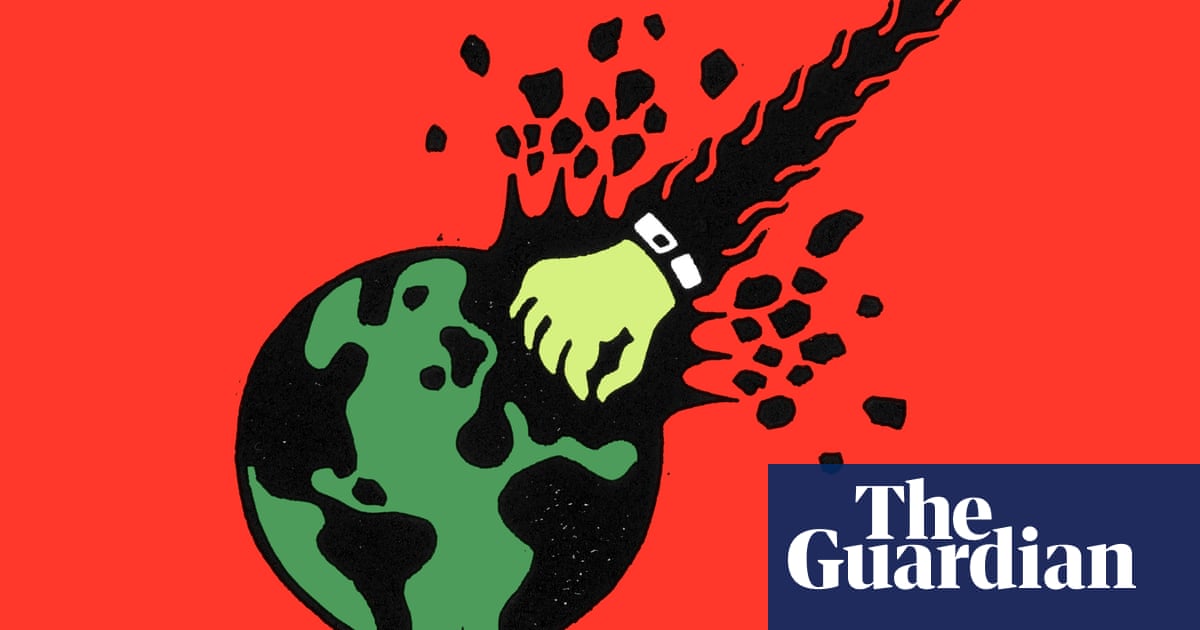
The Rise Of End Times Fascism

Theme: Climate & Ecology, Culture change, Economy, Social Justice

Narrative work type: Deep narrative, Insight, Narrative Strategy, Tactics

A clear-eyed systemic analysis of "rightwing leaders and their rich allies" who have "bought into various apartheid fantasies of bunkered safety" and are "choosing to let the Earth burn" with a “darkly festive fatalism”. Two recommendations for moving forward: 1. "Understand this simple fact: we are up against an ideology that has given up not only on the premise and promise of liberal democracy but on the liveability of our shared world – on its beauty, on its people, on our children, on other species.” And 2. "Counter their apocalyptic narratives with a far better story about how to survive the hard times ahead without leaving anyone behind. A story capable of draining end times fascism of its gothic power and galvanising a movement ready to put it all on the line for our collective survival. A story not of end times, but of better times; not of separation and supremacy, but of interdependence and belonging; not of escaping, but staying put and staying faithful to the troubled earthly reality in which we are enmeshed and bound."

Author: Naomi Klein, Astra Taylor; The Guardian

From Interconnection to a “Larger Us”: Expanding Circles of Identity, Care, and Solidarity (Part 1)

Theme: Care, Culture change, Economy, Philanthropy, Social Justice

Narrative work type: Narrative Strategy

“Interconnection is a narrative antidote to authoritarianism,” but we must “embody interconnection in how we see ourselves and organise.” Because “narrative work isn’t just about crafting stories to make sense of reality; it’s also about shaping the lived experiences and the sense of possibility we collectively nurture.” So we must “expand the boundaries of our identity beyond organisational logos, single-issue campaigns, and geographical silos that have long structured our social change efforts.” Roa also guards against the trap of ‘us and them’ framing: “every time we frame those who sow fear as a distinct ‘them,’ we inadvertently reproduce the same logic we’re trying to dismantle.” Instead, ‘change the game’ by “inviting people on a collective journey where the goal isn’t to defeat ‘the other,’ but to build a shared future rooted in dignity, interconnectedness, and the common good.”

Author: Mónica Roa; Puentes, Horizons Project

It All Starts With a Cup of Tea

Theme: Climate & Ecology, Culture change, Economy, Social Justice

Narrative work type: Narrative Strategy, Tactics

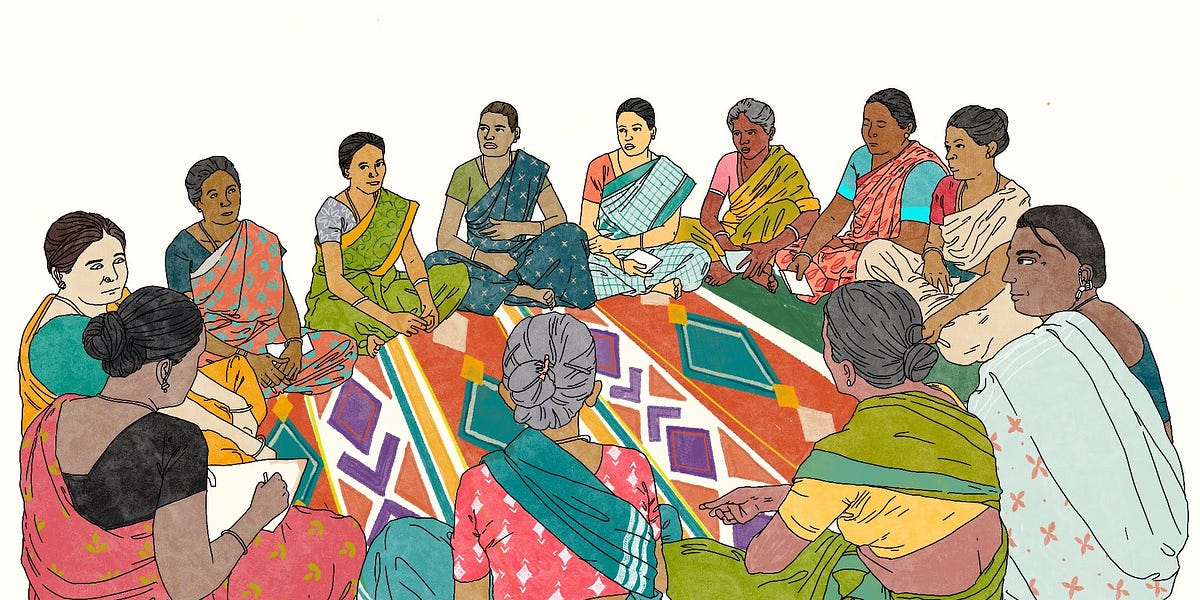
Getting together to build alternatives is quite overwhelming. “If it feels impossible – on top of paying the bills / feeding the kids / surviving – to build a wind turbine like the folks in Lawrence Weston, or buy your own farm like the community in Fordhall, can you really join in?” Golding offers a way through with three simple, accessible ingredients: “1. A handful of people; 2. A shared frustration; 3. A cup of tea / a pint of beer / some food.” He reminds us that “change inevitably starts small, and personal,” and that “caring beats control: when people come together to take on an issue they care about, they’re more likely to commit with creativity, determination and irrepressible energy than they are when change is forced on them from outside… If energy can be unlocked, and skills pooled, the resulting change can be huge – as the projects we’re sharing show.”

Author: Matt Golding; Antidote

Subaltern Storytelling

Theme: Climate & Ecology, Culture change, Economy, Social Justice

Narrative work type: Framing, Narrative Strategy

Reflections on “a field of post-colonial theory that looks at how the most marginalised people are silenced,” noticing that “we in social change also tend to speak for the subaltern: the ‘suffering subject’ of our stories, victim of injustice but lacking agency to confront it without our intervention.” We’re encouraged to “recognise the agency that exists in communities, which states cannot control” and work with “narrative as something we do together, not something we broadcast.” To do this, ask if you’re “open to being changed by the people you speak with? Or are you just looking to ‘get the message out’?” and notice that “narrative is not something we fixed that emerges from one round of research, but a fluid mosaic of conversations and stories that is constantly evolving.” To truly effect decolonisation, “articulate some sense how we will all live in the future we want to see happen,” but remember that “we cannot rely on ‘magic words’ to change the narratives. Instead, we have to be the narrative.”

Author: Thomas Coombes; Hope-Based Communication

Lost Words

Theme: Social Justice

Narrative work type: Language, Narrative Strategy

The words banned by the Trump regime offer a “glossary for resistance and rebuilding the world they are destroying”. They expose how “MAGA loves simplicity and hates complexity: the government is reduced to the dictats of one man, America is reduced to a single cultural identity, the role of women is reduced to a single purpose (reproduction), and the economic system is reduced to a single function (production).” Small suggests that the “antidote to this hellscape” is “the defence of language, minority language, and gorging ourselves on the complexity and nuance of life and the natural world… If the MAGA phenomenon is a belief system it is untouchable by rational discourse. But you can create and conjure an alternate from their blueprint. We do not need to be the victim” (a banned word).

Author: Mike Small

We Can’t Manage Decline and Call It Justice

Theme: Climate & Ecology, Economy, Social Justice

Narrative work type: Deep narrative

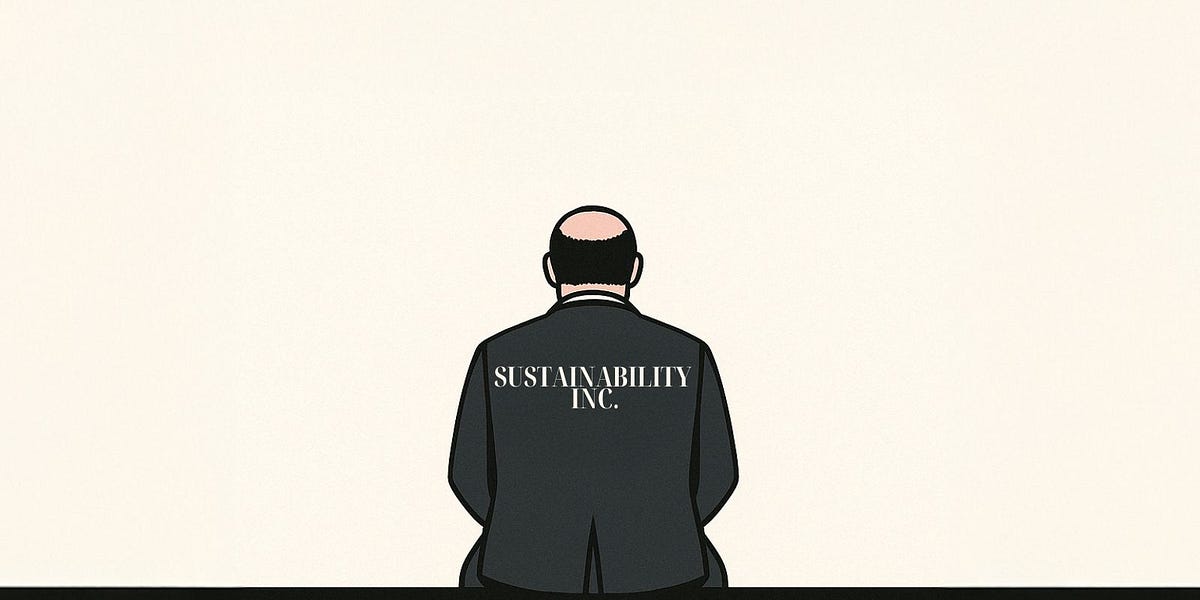
A raw personal reflection from someone confronting their complicity. “We often talk about sustainability as if it’s inherently good. But if we’re not addressing the root causes – the capitalist, extractive systems that birthed the crisis – we’re perpetuating colonialism in greenface. Our strategies become complicit. Our efforts, however well-intentioned, become mechanisms for the system we claim to resist.” For Benjamin, “the idea that we can continue extracting from the Global South under the banner of ‘sustainable development’ is not just misleading. It’s violent… We should be investing in movements, not just in metrics. In coalitions and cooperatives, not only in startups and scorecards. In relationships of care, community-based governance, and decolonial reparations – not just quarterly impact reports.” So he commits to “centering root-cause analysis in my work. To challenging techno-fixes and symbolic impact. To uplifting Indigenous, Black, and land-based justice movements. To practicing solidarity over scalability… because if our work isn’t dismantling the systems killing the planet, it isn’t work worth doing.”

Author: Kasper Benjamin; The Minority Report

  • « Go to Previous Page
  • Page 1
  • Page 2
  • Page 3
  • Page 4
  • Page 5
  • Interim pages omitted …
  • Page 40
  • Go to Next Page »

Footer

Get the latest narrative insights, collected and delivered to your inbox, every two weeks

SUBSCRIBE

Questions, comments, or suggestions? Contact us

We are supported by:

The JJ Charitable Trust

Calouste Gulbenkian Foundation

  • Privacy Policy
We use cookies on our website. By clicking “Accept”, you consent to the use of the cookies.
Accept
Read our privacy policy for more details.
Manage consent

Privacy Overview

This website uses cookies to improve your experience while you navigate through the website. Out of these, the cookies that are categorized as necessary are stored on your browser as they are essential for the working of basic functionalities of the website. We also use third-party cookies that help us analyze and understand how you use this website. These cookies will be stored in your browser only with your consent. You also have the option to opt-out of these cookies. But opting out of some of these cookies may affect your browsing experience.
Necessary
Always Enabled
Necessary cookies are absolutely essential for the website to function properly. These cookies ensure basic functionalities and security features of the website, anonymously.
CookieDurationDescription
cookielawinfo-checkbox-analytics11 monthsThis cookie is set by GDPR Cookie Consent plugin. The cookie is used to store the user consent for the cookies in the category "Analytics".
cookielawinfo-checkbox-functional11 monthsThe cookie is set by GDPR cookie consent to record the user consent for the cookies in the category "Functional".
cookielawinfo-checkbox-necessary11 monthsThis cookie is set by GDPR Cookie Consent plugin. The cookies is used to store the user consent for the cookies in the category "Necessary".
cookielawinfo-checkbox-others11 monthsThis cookie is set by GDPR Cookie Consent plugin. The cookie is used to store the user consent for the cookies in the category "Other.
cookielawinfo-checkbox-performance11 monthsThis cookie is set by GDPR Cookie Consent plugin. The cookie is used to store the user consent for the cookies in the category "Performance".
viewed_cookie_policy11 monthsThe cookie is set by the GDPR Cookie Consent plugin and is used to store whether or not user has consented to the use of cookies. It does not store any personal data.
Functional
Functional cookies help to perform certain functionalities like sharing the content of the website on social media platforms, collect feedbacks, and other third-party features.
Performance
Performance cookies are used to understand and analyze the key performance indexes of the website which helps in delivering a better user experience for the visitors.
Analytics
Analytical cookies are used to understand how visitors interact with the website. These cookies help provide information on metrics the number of visitors, bounce rate, traffic source, etc.
Advertisement
Advertisement cookies are used to provide visitors with relevant ads and marketing campaigns. These cookies track visitors across websites and collect information to provide customized ads.
Others
Other uncategorized cookies are those that are being analyzed and have not been classified into a category as yet.
SAVE & ACCEPT